Accurately identifying a dog’s coat type is a fundamental skill for any groomer, as it dictates the appropriate tools, techniques, and styling approach needed to achieve a healthy, beautiful finish. From the dense double coat of a Husky to the wiry texture of a Terrier or the silky, flowing hair of a Yorkshire Terrier, each coat requires specific care to prevent matting, maintain skin health, and enhance the breed’s natural appearance.
In this guide, we’ll walk you through a clear system for dog coat type identification and explain how to tailor your grooming routine to each, ensuring every dog leaves your table looking and feeling their best.
Dog Coat Type Identification That Prevents Common Grooming Mistakes
What Are the Main Types of Dog Coats and How Can You Identify Them?
Coat type identification matters because it affects everything from brushing frequency to what tools work best. A coat is not just “short” or “long.” It has a texture, a density, and a growth pattern that determines how it sheds, how it tangles, and how it should be handled during grooming.
When you can recognize the difference between a smooth coat and a double coat, or a curly coat and a wire coat, you avoid using the wrong brush or bathing schedule and you set the dog up for healthier skin and a more comfortable groom.
How Do You Determine Your Dog’s Coat Type?
Coat type identification starts with a simple look-and-feel check. Begin by noticing the overall length. Is the coat close to the skin, medium and plush, or long and flowing? Next, check density by running your fingers through the coat down to the skin. A thick underlayer suggests a double coat, while a single layer that lies flat and sleek often points to a smooth coat.
Texture is the final clue. Smooth coats feel sleek and uniform. Double coats often feel soft near the skin with a coarser top layer. Curly coats feel springy and can clump together. Wire coats feel rough or bristly, especially along the back and face. Long coats feel silky or cottony depending on the breed and can tangle easily around friction points like behind the ears and under the collar. Hairless dogs have little to no coat, so the focus shifts from brushing to skin care.
Breed can provide a hint, but it should not replace hands-on checking. Even within the same breed, coats can vary based on age, health, grooming history, and whether the dog is altered. That is why coat type identification should always be confirmed by touch before you choose tools or start a grooming routine.
What Are The Six Primary Dog Coat Types And Their Characteristics?
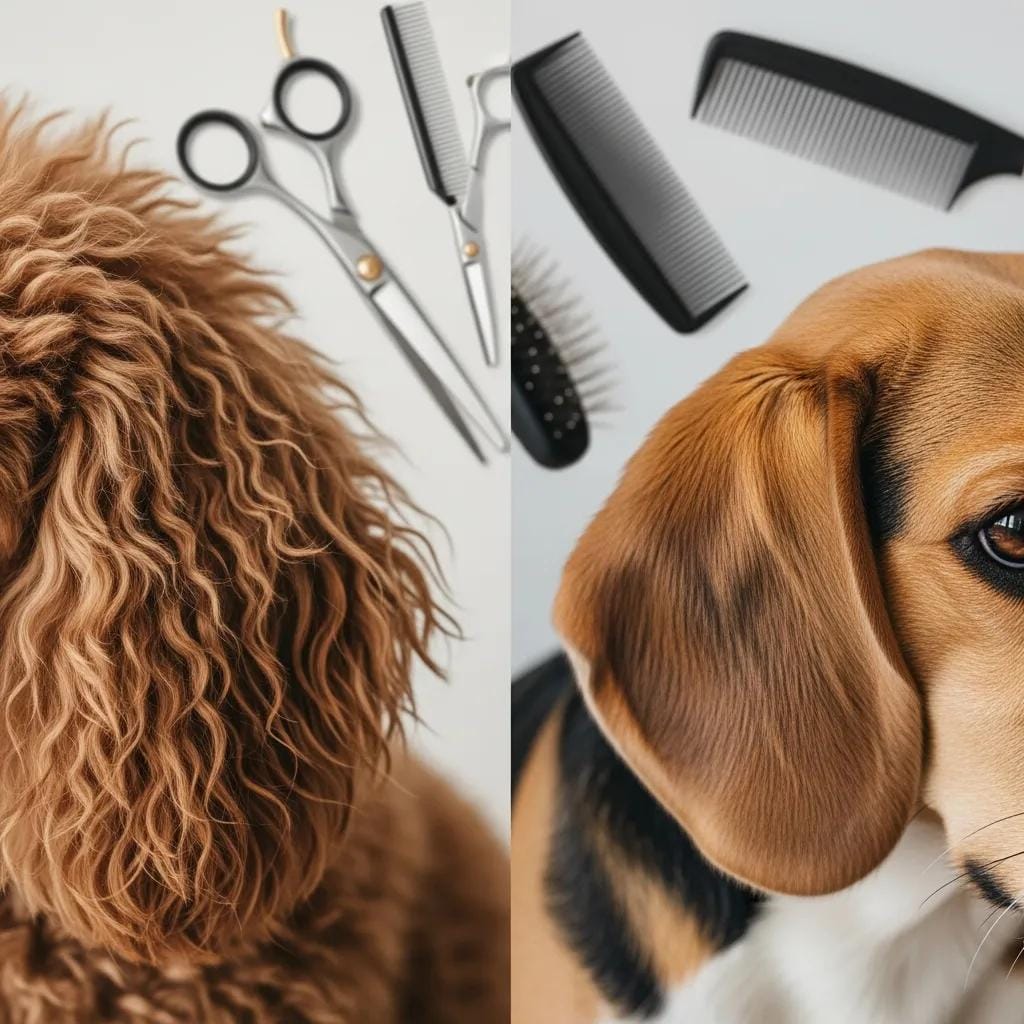
- Smooth coats are short and lie close to the skin. They tend to shed, but they do not usually mat. Brushing is mainly about removing loose hair and distributing natural oils. Breeds like Beagles and Boxers commonly fall into this group.
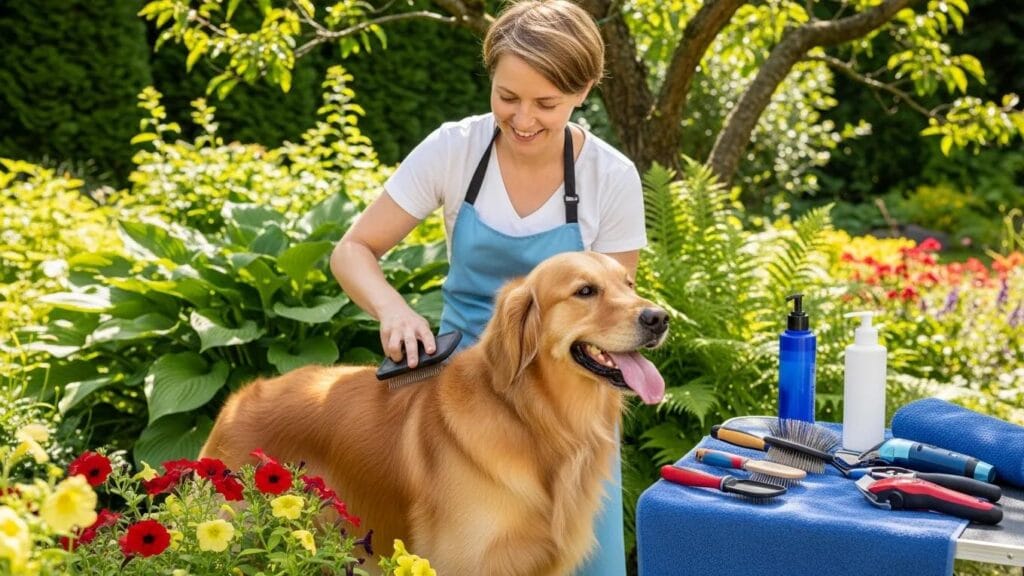
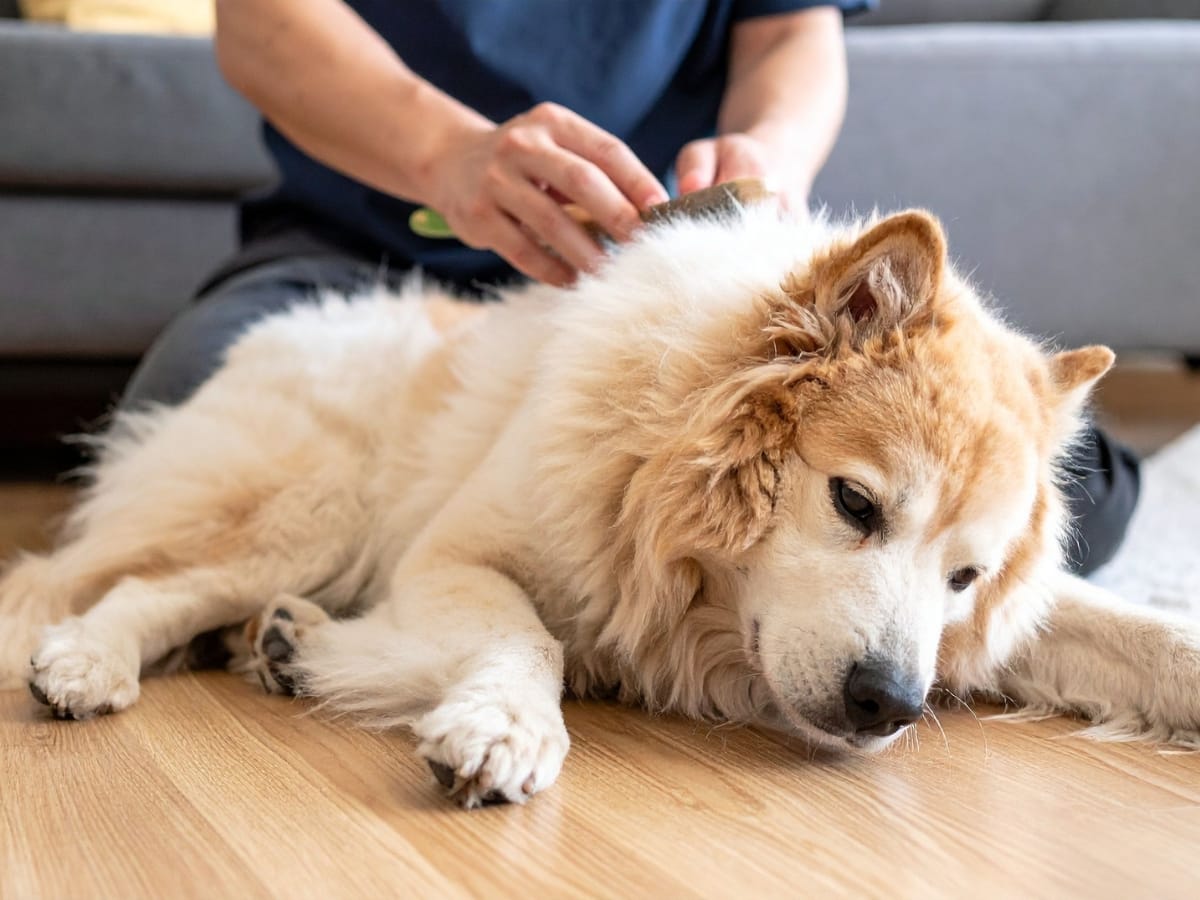
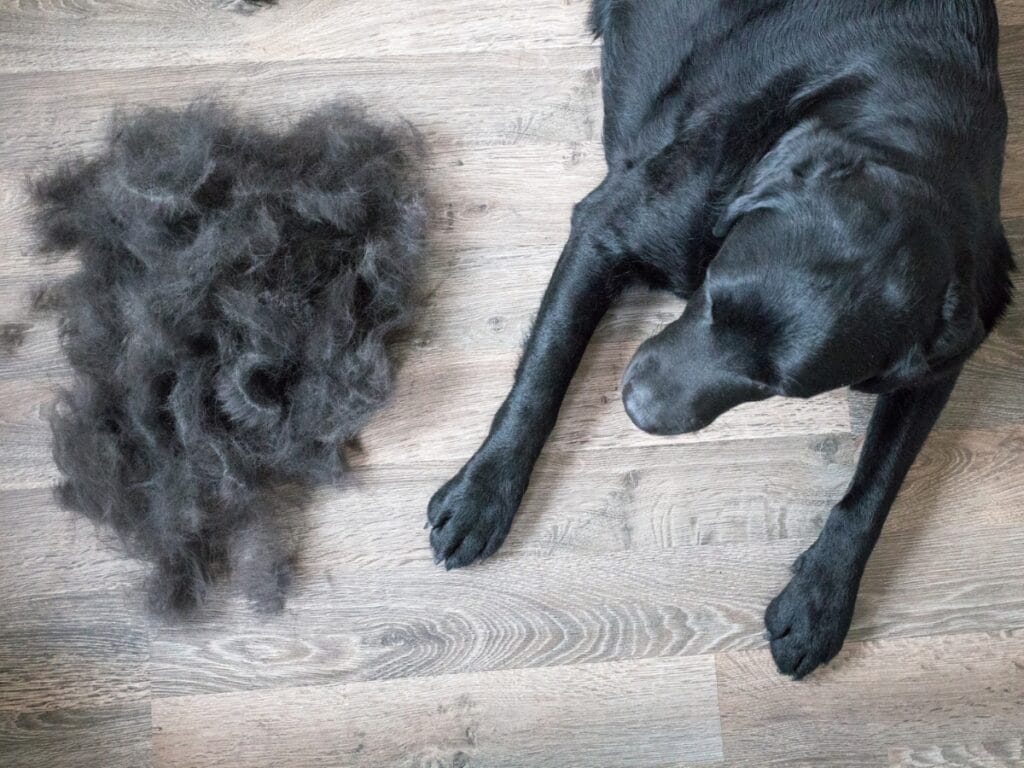
- Double coats have a soft, insulating undercoat beneath a tougher outer layer. These coats often “blow” seasonally, meaning shedding increases heavily during certain times of year. They benefit from regular undercoat removal to prevent compacted shedding. Huskies and Golden Retrievers are well-known examples.
- Curly coats range from tight curls to looser waves, and they often trap debris and tangles. Because curls hold shed hair instead of letting it fall out, matting can happen quickly without consistent maintenance. Poodles and Portuguese Water Dogs are common curly-coated breeds.
- Wire coats have a coarse texture and are often maintained through hand-stripping to preserve their natural feel and color. Clipping can soften the coat and change the texture over time, so grooming method matters. Airedale Terriers are a classic example of a wire coat.
- Long coats are more likely to tangle because length creates friction. Regular brushing, careful detangling, and routine trimming help prevent mats, especially around the ears, legs, and underside. Afghan Hounds and Shih Tzus are commonly associated with long coats.
- Hairless coats require a different approach. Instead of focusing on brushing, grooming is about protecting the skin from sun, dryness, and irritation. Chinese Cresteds are a well-known hairless breed.
When you can spot these traits quickly, coat type identification becomes second nature. That makes it easier to choose the right brush, set a realistic grooming schedule, and keep the dog comfortable between professional grooms.
How Does Understanding Dog Coat Genetics Enhance Grooming Techniques?
Coat type identification gets easier when you understand that many coat traits are inherited, not random. Genetics influence how long the coat grows, whether it curls, how dense the undercoat becomes, and how the coat behaves between grooms. When groomers connect coat behavior to biology, they can set better expectations, choose techniques that match the coat’s structure, and explain care routines in a way owners actually understand. That usually leads to fewer surprises, less frustration, and better coat health over time.
Genetics also helps explain why two dogs that look similar can groom very differently. A mixed-breed dog might have a coat that feels like a Lab on the top but mats like a Poodle underneath. Another might shed heavily even with frequent brushing because the undercoat is built for insulation. In those cases, coat type identification needs to be based on what the coat is doing, not what the dog is “supposed” to be.
Which Genes Influence Dog Coat Length And Texture?
Several genes have been linked to common coat traits, which is useful context for understanding why coats behave the way they do. The FGF5 gene is associated with hair length. When a dog carries the long-hair variant, the coat tends to keep growing instead of stopping at a short length. That usually means more regular trimming and more attention to tangles in friction areas.
The KRT71 gene influences curl. Dogs with certain variants develop tighter curls or a more wave-like pattern, which can trap shed hair inside the coat. That trapped hair is one reason curly coats mat faster than many owners expect. RSPO2 is associated with furnishings and texture, such as the wiry facial hair and leg hair seen in many terrier-type coats. Coats with furnishings often require different tools and maintenance because the texture does not respond the same way to clipping and may hold debris more easily.
This does not mean you need genetic testing to groom well, but it helps explain why a coat behaves consistently in certain ways. When you pair genetics knowledge with hands-on coat type identification, you can predict grooming needs with more accuracy.
How Can Groomers Apply Genetic Knowledge To Breed-Specific Coat Care?
Genetic context is most useful when it guides realistic, coat-appropriate care. Curly-coated breeds like Poodles inherit a coat structure that holds onto shed hair. That makes routine detangling and regular clipping a practical necessity, not a cosmetic choice. When owners understand that curl type naturally leads to matting without consistent maintenance, they are more likely to follow a schedule that protects the coat and skin.
Double-coated breeds are another good example. These coats are designed to insulate, which is why they shed seasonally and why undercoat maintenance matters. In many cases, the goal is controlled deshedding, not shaving. Removing the undercoat safely helps reduce compaction and improves airflow, while shaving can change how the coat grows back and may create long-term texture issues. That is where coat type identification and genetics work together. If you know you are dealing with a true double coat, you can choose tools and techniques that support the coat’s natural function.
For mixed breeds, genetics explains why coat type identification needs to be practical rather than label-based. A doodle coat, for instance, can range from loose waves to tight curls, and the grooming approach changes with that structure. When you use genetic reasoning to explain the “why” behind your recommendations, it builds trust. Owners are more likely to brush correctly, schedule grooms consistently, and stop using shortcuts that damage the coat.
Top Professional Grooming Techniques for Every Dog Coat Type
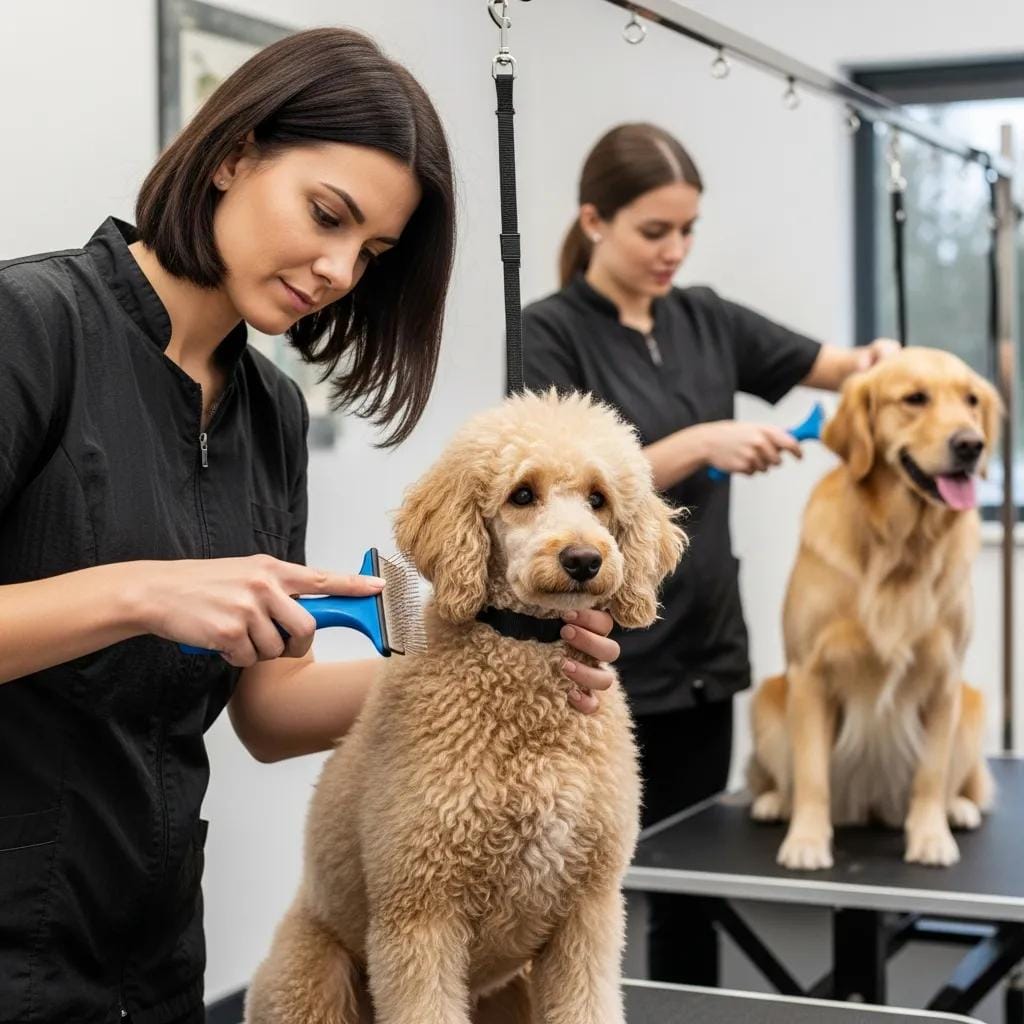
Great grooming starts with coat type identification. Once you know what you are working with, it becomes easier to choose tools that protect the skin, prevent matting, and keep the coat looking its best between appointments. Different coats behave differently because of density, texture, and shedding patterns. A technique that works perfectly on a smooth coat can cause breakage on a long coat or ruin the finish on a wire coat. When coat type identification is done correctly, your grooming plan becomes more efficient and the dog stays more comfortable.
Which Tools And Methods Are Ideal For Grooming Smooth And Short Coats?
Smooth and short coats respond best to gentle tools that lift loose hair without scraping the skin. Rubber curry brushes and grooming mitts work well because they grab shed hair and surface dirt while staying comfortable for most dogs. This coat type usually benefits from steady, even pressure rather than aggressive brushing, since the coat lies close to the body and the skin can be sensitive.
After brushing, a quick wipe-down with a damp cloth can remove remaining dust and give the coat a clean finish. These coats do not typically mat, so the focus is more on shedding control, skin health, and keeping oils distributed evenly. For many dogs with short coats, a consistent weekly session keeps shedding manageable and helps you spot dry skin, irritation, or bumps early.
How Do You Manage Double, Wire, Curly, Long, And Hairless Coats Professionally?
Double coats require a different mindset. The goal is to remove loose undercoat without stripping the protective topcoat. Undercoat rakes and deshedding tools can be useful when used carefully, especially during seasonal shedding when the undercoat releases more heavily. Work in sections, keep the coat dry unless you are bathing, and watch for signs of irritation. Dogs with dense double coats benefit from more frequent undercoat work during heavy shedding seasons because compacted undercoat can trap moisture and lead to hot spots.
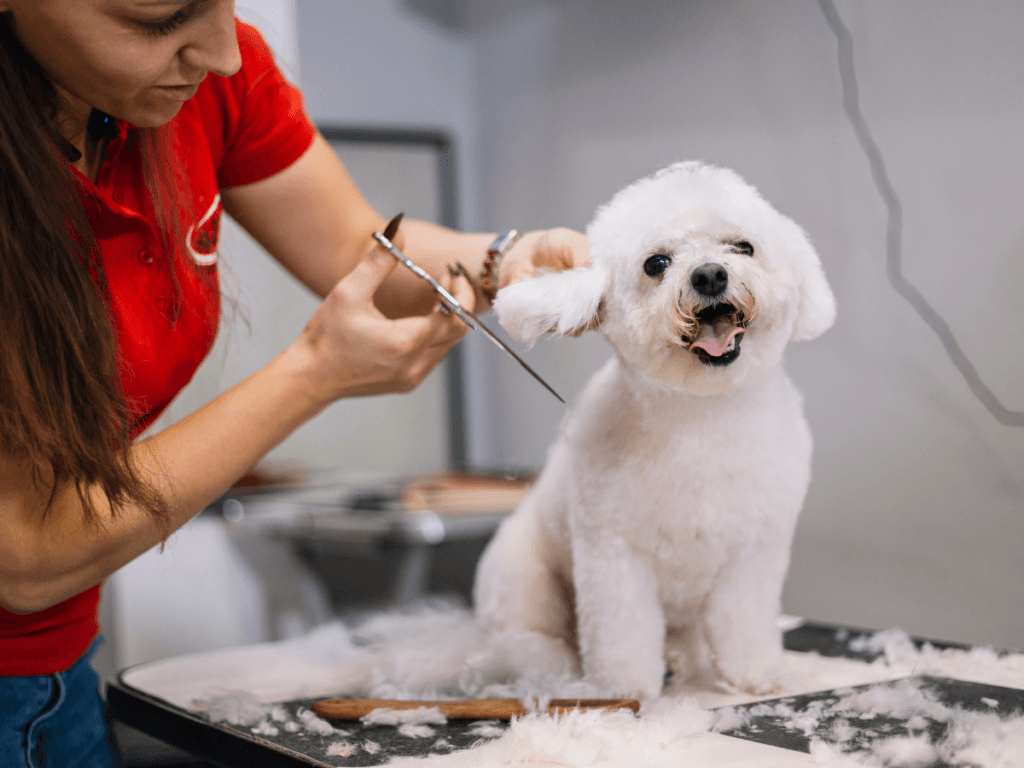
Wire coats are all about maintaining texture. If the breed standard calls for a wiry finish, hand-stripping is often the technique that preserves it. Stripping removes dead guard hairs so new growth can come in correctly. Using a stripping knife or fingers, you work the coat gradually rather than clipping everything down. Clipping may be appropriate for pet trims depending on owner preference, but it usually softens the coat and can change the look over time. This is where coat type identification matters because the wrong approach can permanently shift texture.
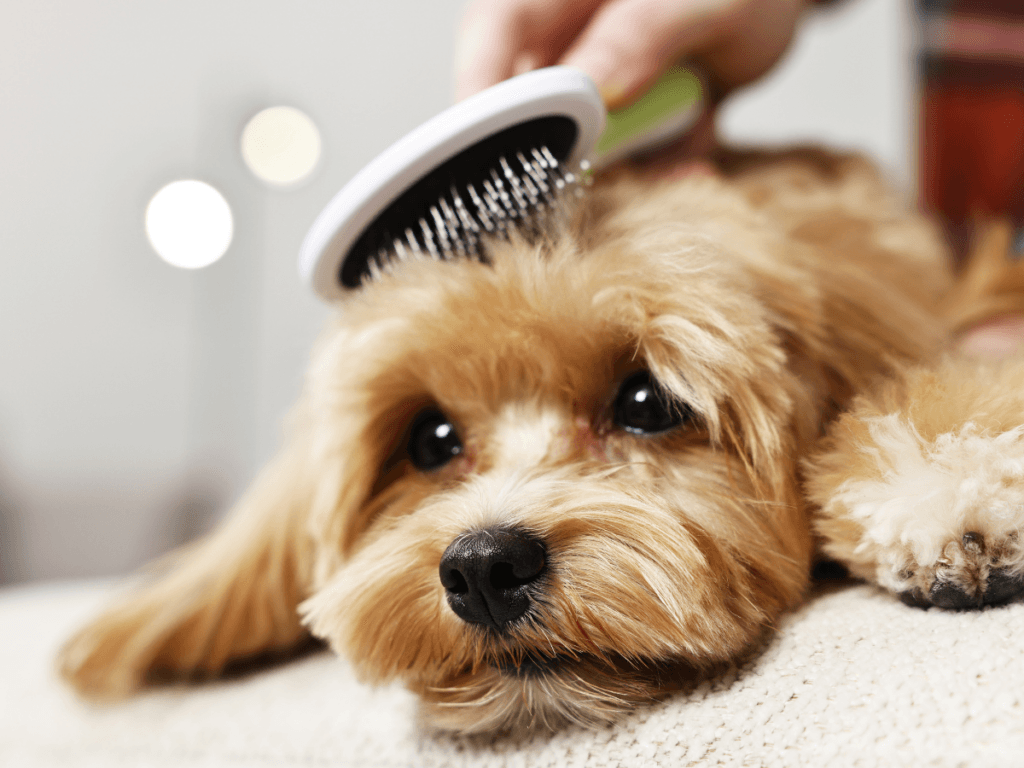
Curly coats are prone to matting because shed hair gets caught in the curl pattern instead of falling away. A slicker brush, used with control, helps separate curls and remove tangles without tearing. Follow with a comb to confirm the coat is fully brushed through, especially in friction areas like behind the ears, under the collar, and around the legs. Light leave-in conditioners or detanglers can help reduce breakage and make brushing safer, especially when the coat is kept longer.
Long coats need consistent detangling to prevent mats from forming close to the skin. A wide-toothed comb is useful for gently working through sections, while a slicker brush helps catch smaller tangles. The best results come from brushing in layers and checking your work with a comb, since surface brushing can leave tight mats underneath. Regular trims around high-tangle areas can also reduce daily maintenance and keep the dog comfortable.
Hairless coats shift grooming from hair management to skin care. Gentle cleansing, moisturizing, and sun protection matter more than brushing. Because the skin is exposed, it can dry out or become irritated more easily, so products should be mild and used consistently.
When you match tools and technique to the coat, grooming becomes faster, safer, and more predictable. Strong coat type identification also helps owners understand what their dog’s coat needs between appointments, which reduces matting, improves comfort, and keeps results looking consistent.
What Common Challenges Arise When Grooming Different Coat Types And How Can They Be Solved?
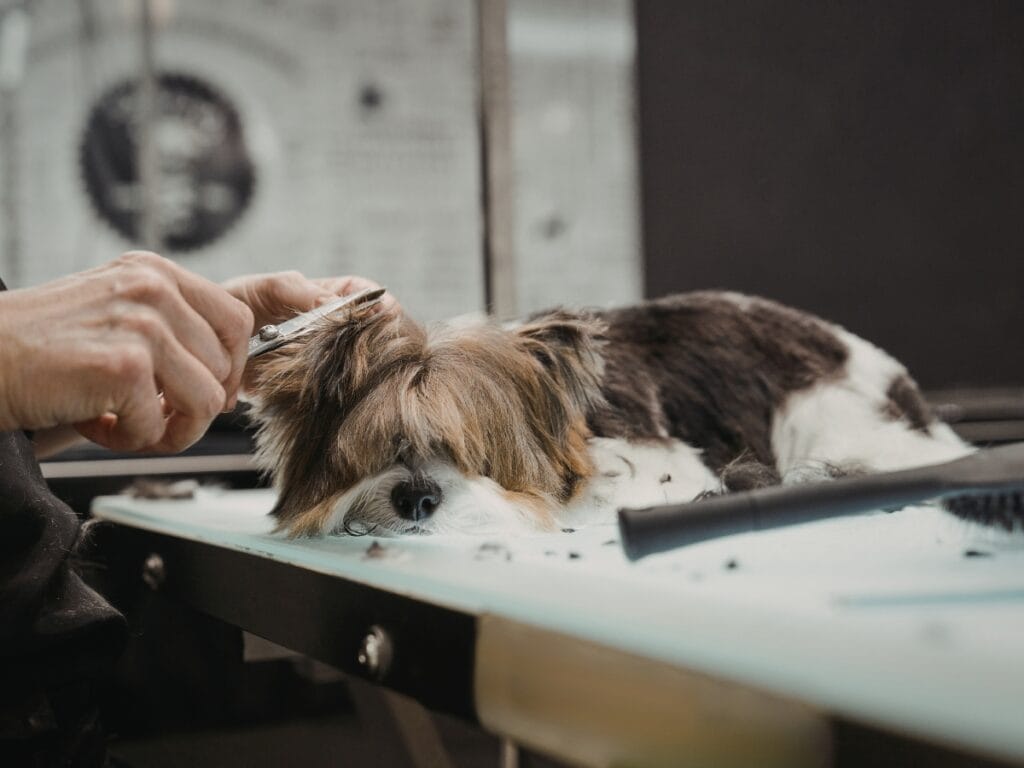
Most grooming problems are not caused by one “bad day” of brushing. They come from coat behavior that was predictable from the start. That is why coat type identification matters. When you understand how a coat sheds, tangles, or reacts to friction, you can prevent the common issues that lead to discomfort for the dog and time-consuming corrections for the groomer. Curly and long coats tend to mat, double coats shed heavily and compact, and sensitive skin can show up across coat types if the wrong tools or products are used.
The goal is to spot the problem early and use a solution that matches the coat, not a one-size routine. When owners understand what to do at home and why, results improve quickly. Coat type identification also helps you set realistic expectations, especially for mixed-breed dogs with coats that combine shedding and matting traits.
How To Prevent And Treat Matting In Curly And Long Coats
Matting is common in curly and long coats because the hair catches, twists, and tightens as the dog moves. Friction points, like behind the ears, under collars, in armpits, and around the tail, are usually where mats begin. Preventing mats starts with a consistent brushing routine that reaches the skin, not just the top layer. A slicker brush can separate hair, but a comb should be used afterward to confirm the coat is fully detangled. If the comb will not glide through easily, there is still a knot forming underneath.
For home care, a light detangling spray can help reduce breakage and make brushing safer, especially on coats that snag easily. It is also helpful to keep problem areas slightly shorter, because a small trim around high-friction zones can prevent tangles from tightening into mats. Short, frequent trims often do more to prevent matting than waiting for a longer full-body cut.
When mats have already formed, the safest approach is to work slowly and avoid pulling on the skin. Dematting tools can help loosen small tangles, but they must be used carefully because they can irritate skin if overworked. Scissors should be used with caution, since cutting close to the skin can lead to injuries, especially in tight mats that hide folds or thin skin. In many cases, the kindest option is to clip the mat out rather than trying to save length at the dog’s expense. This is where coat type identification helps again, because you can explain that the coat’s structure makes matting a predictable risk without regular maintenance.
What Are Effective Shedding Management Strategies For Double Coats?
Double coats shed because the undercoat is designed for insulation. When that undercoat releases seasonally, it can come out in large amounts and compact against the skin. That compaction can trap moisture and debris, which can lead to irritation. Managing shedding starts with regular brushing that targets the undercoat without damaging the topcoat. Undercoat rakes and deshedding tools can be effective when used with a gentle hand, working in sections and avoiding repeated scraping in the same area.
Scheduling more frequent deshedding during heavy seasonal shedding helps reduce loose hair and improves coat comfort. At home, consistent brushing between appointments keeps the undercoat from packing down. Bathing can also support shedding management if the coat is thoroughly rinsed and fully dried, since damp undercoat left near the skin can create its own problems.
Nutrition matters as well. A healthy coat sheds more predictably and is less likely to become dry or brittle. While grooming tools handle the immediate problem, good coat condition supports long-term results.
When you combine early prevention with the right technique, grooming challenges become manageable instead of constant. Coat type identification is the step that keeps your plan realistic, humane, and effective across every coat you see.
Top Professional Grooming Techniques for Every Dog Coat Type
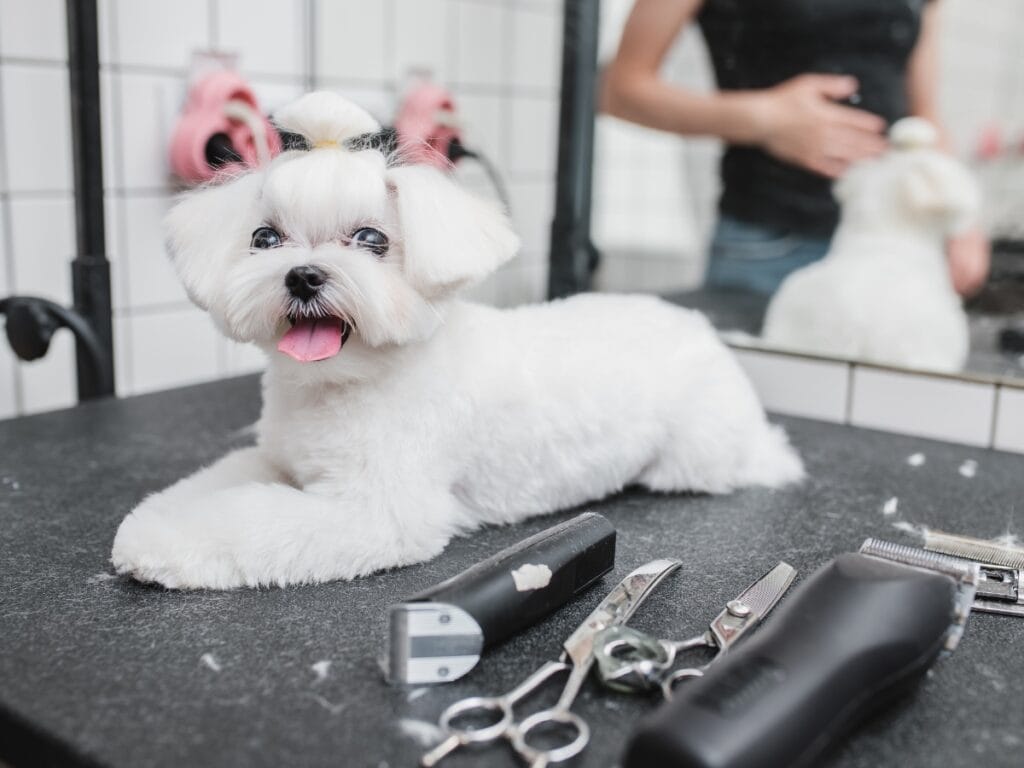
Coat type identification is not just a grooming “nice to have.” It is one of the fastest ways to show competence in a hands-on field where results matter right away. When you can identify a coat accurately, you choose safer tools, avoid damaging texture, and reduce discomfort for the dog. You also communicate more clearly with owners about what maintenance looks like between appointments. In a busy salon, that skill saves time, prevents mistakes, and helps you build trust with clients who want consistent outcomes.
For aspiring groomers, coat type identification also strengthens your resume because it signals that you understand more than basic bathing and trimming. It shows you can assess a dog, adapt your approach, and explain your decisions. Those are the same skills employers look for when they are hiring someone they can put on the floor with confidence.
Why Is Coat Type Analysis Essential In Professional Dog Groomer Certification?
Most certification programs expect you to recognize coat types and apply the correct grooming methods based on what you see and feel. That does not mean memorizing breed lists. It means being able to evaluate length, density, texture, and shedding patterns, then select tools and techniques that match the coat. A curly coat needs mat prevention and careful line brushing, while a double coat requires controlled undercoat work and a plan for seasonal shedding. A wire coat may require a different approach entirely if the goal is to preserve texture.
Coat type identification is also tied to safety. Knowing what a coat is likely to do helps you avoid common mistakes, like overworking the skin with the wrong brush, skipping undercoat removal until the coat compacts, or trying to detangle mats in a way that causes pain. Certification assessments often include practical decision-making. When you can explain why you chose a tool, why you prepped the coat a certain way, and how you handled problem areas, it demonstrates that you understand the work, not just the steps.
How Does OTC K9 Grooming School Prepare Students For Real-World Coat Care Challenges?
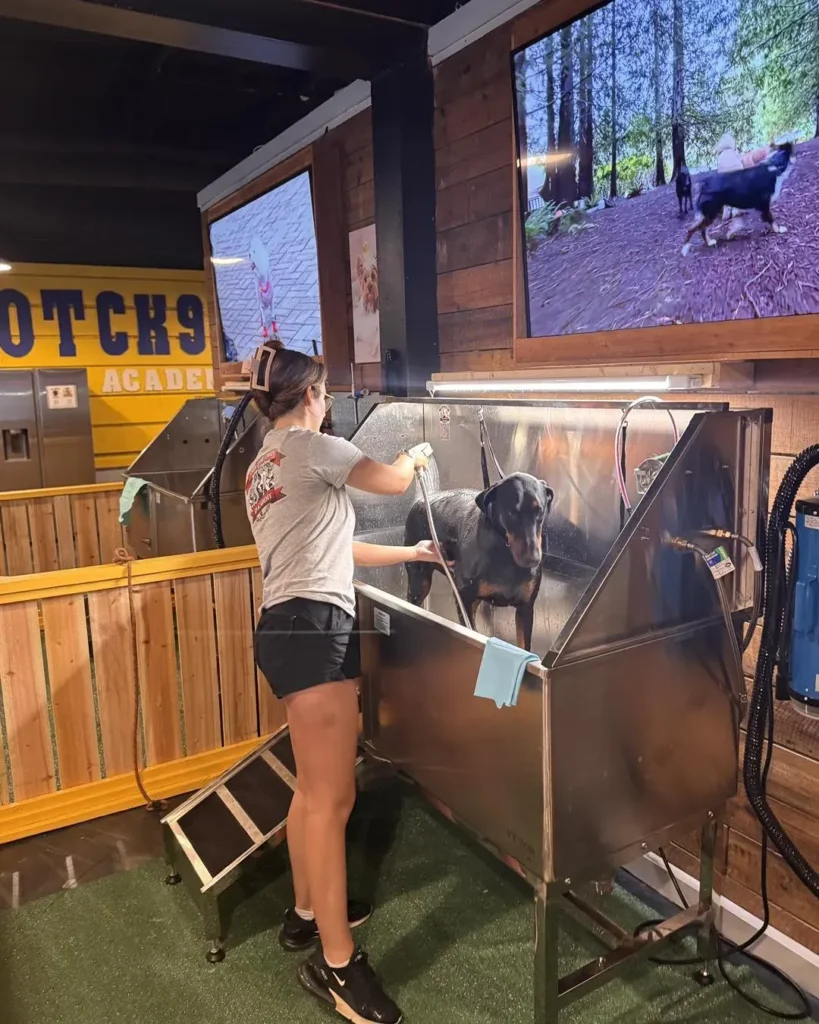
OTC K9 Grooming School emphasizes real-world coat handling so students graduate with more than theory. Instead of learning one routine and trying to apply it to every dog, students practice coat type identification across a range of coat patterns, textures, and grooming needs. That includes learning how to approach matting, shedding cycles, sensitive skin, and coat texture maintenance in a way that matches the dog in front of you.
Hands-on training matters because it builds confidence in the moment-to-moment decisions groomers make every day. A dog may arrive with compacted undercoat, hidden mats, or a mixed coat texture that does not behave like the breed stereotype. Having practice with different coat types prepares students to assess quickly, choose tools that make sense, and deliver a result that is comfortable for the dog and practical for the owner to maintain.
OTC K9’s Professional Dog Groomer Certification is designed to develop those skills through guided practice and coat-specific instruction. By the time students complete the program, they have more experience with coat evaluation, handling, and technique selection, which are the exact areas that help new groomers stand out early in their careers.
What Are The Latest Trends And Tools In Dog Coat Grooming For 2026 And Beyond?
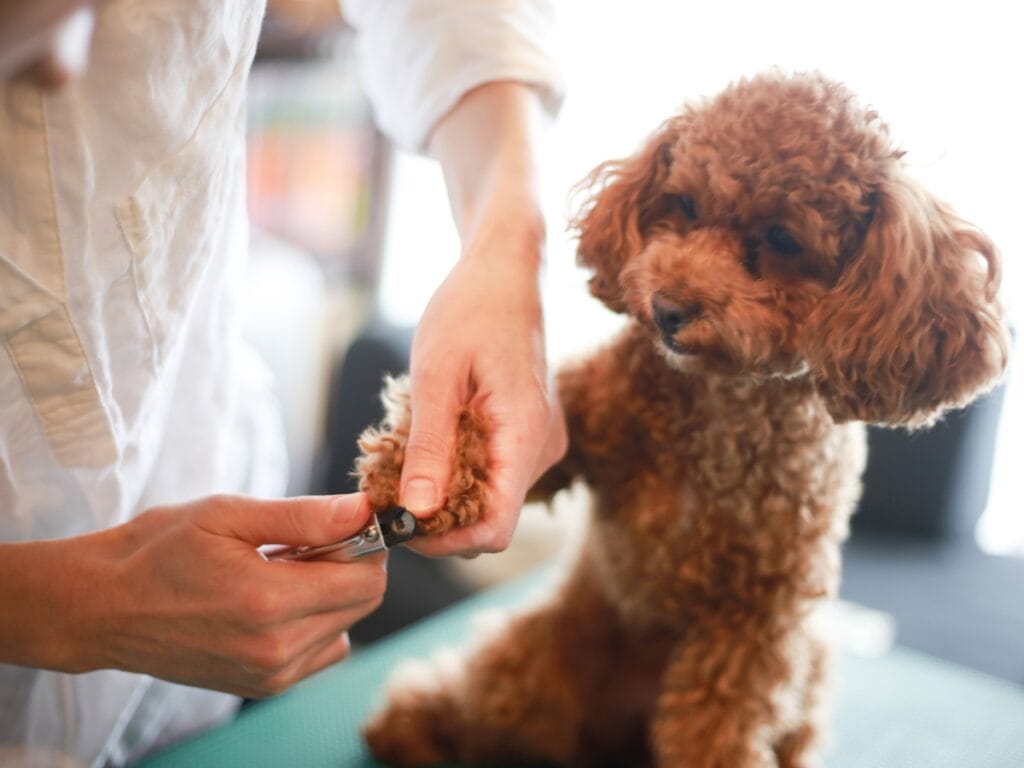
Dog grooming keeps shifting toward cleaner routines, better coat health, and more consistency from appointment to appointment. A big part of that progress comes from improved products and tools, but it also comes from better decision-making at the start of the groom. Coat type identification is what ties it all together. When you can quickly recognize coat density, texture, and shedding pattern, you can match the right products and tools to the dog in front of you, instead of relying on guesswork or breed assumptions.
Looking ahead, many of the biggest changes are less about flashy gadgets and more about practical upgrades. Groomers are paying closer attention to skin sensitivity, ingredient quality, time-saving equipment, and record-keeping that improves follow-through. These trends support better results for clients and a more efficient workflow for groomers, especially when coat type identification is treated as a skill that guides the entire process.
How Are Wellness-Focused And Eco-Friendly Products Changing Grooming Practices?
Wellness-focused grooming products are becoming more common because many owners want routines that feel gentle, simple, and skin-friendly. Shampoos and conditioners are being chosen more carefully based on coat needs and skin tolerance, rather than using one product for every dog. This matters because coat behavior and skin response are connected. A curly coat that mats easily may benefit from products that improve slip and reduce breakage during brushing, while a double coat may need formulas that rinse clean and do not leave residue trapped in the undercoat.
Eco-friendly product choices are also part of the conversation. Many clients prefer options that feel more sustainable, whether that means concentrated formulas, lighter fragrance, or packaging that reduces waste. The most important part is keeping expectations realistic. “Natural” does not automatically mean better for every dog, especially for sensitive skin, so patch-testing and careful observation still matter. A wellness approach works best when it is guided by what the coat and skin are actually doing, not by the label alone.
What Smart Grooming Technologies Are Emerging For Different Coat Types?
Technology in grooming is becoming more supportive and less disruptive. Instead of replacing hands-on skill, newer tools and systems are aimed at helping groomers work faster, track coat health over time, and reduce repeat problems like matting and coat compaction. Some newer brushes and grooming tools are being designed with comfort and efficiency in mind, using improved ergonomics, softer pin designs, or better undercoat reach so groomers can do effective work with less irritation.
Software is also becoming part of everyday grooming operations, especially for scheduling, client records, and grooming notes. Keeping consistent notes on coat condition, matting patterns, shedding cycles, and product response helps you groom more predictably. Over time, that continuity leads to better outcomes because you are not starting from scratch at every visit. For mixed-breed dogs with complicated coats, records also support more accurate coat type identification, since you can track what the coat does seasonally and how it responds to different tools.
Matching Techniques And Tools To Coat Types
The best tools still depend on the coat you are working with, and the table below is a useful baseline. The goal is not to memorize a list, but to use it as a starting point and adjust based on coat condition, skin sensitivity, and maintenance habits at home.
| Coat Type | Grooming Technique | Recommended Tools |
|---|---|---|
| Smooth | Minimal brushing | Rubber brush, grooming mitt |
| Double | Regular brushing | Undercoat rake, de-shedding tool |
| Curly | Frequent brushing | Slicker brush, leave-in conditioner |
| Wire | Hand-stripping | Stripping knife |
| Long | Daily brushing | Wide-toothed comb, slicker brush |
| Hairless | Skin care focus | Gentle cleanser, moisturizer |
When you stay current on products, tools, and workflow systems, you give yourself more options. When you combine those options with strong coat type identification, you get the real advantage: safer grooming, healthier coats, and results that stay consistent between visits.
Frequently Asked Questions
What Are The Signs That A Dog Needs Grooming Based On Its Coat Type?
Coat type identification helps you spot grooming needs early, before the dog is uncomfortable. Smooth-coated dogs often show it through a dull finish, excess shedding on furniture, or a gritty feel from dirt and oils that are not being brushed out. Double-coated dogs may shed heavily, feel puffy through the shoulders and hips, or have a loose, fluffy undercoat that is starting to compact. Curly and long coats tend to show problems faster because tangles tighten quickly. You may notice knots behind the ears, along the collar line, under the legs, or near the tail. Hairless dogs have different signs. Dry patches, flaking, clogged pores, redness, or irritation can signal the need for cleansing and moisturizing.
How Often Should Different Dog Coat Types Be Groomed?
There is no one schedule that fits every dog, but coat type identification gives you a reliable baseline. Smooth coats often do well with weekly brushing and baths as needed based on lifestyle. Double coats usually need more frequent brushing during heavy shedding seasons, especially when the undercoat is releasing and can compact against the skin. Curly coats typically require weekly maintenance to prevent matting, along with regular trims to keep the coat manageable. Long coats often need daily attention at home because friction and movement create tangles quickly. Hairless breeds benefit from consistent skin care, with gentle baths and moisturizing routines every few weeks depending on the dog’s skin sensitivity.
What Grooming Products Are Essential For Each Coat Type?
The right tools depend on coat type identification, not just coat length. Smooth coats respond well to rubber brushes and grooming mitts that lift loose hair without irritating the skin. Double coats benefit from undercoat rakes and deshedding tools used carefully to remove loose undercoat without damaging the topcoat. Curly coats often need a slicker brush for controlled brushing, a comb to confirm the coat is fully detangled, and a conditioner or detangling spray to reduce breakage. Wire coats may require stripping tools when the goal is to maintain texture. Long coats generally need a wide-toothed comb and a slicker brush to work through tangles in layers. Hairless dogs need gentle cleansers and moisturizers, since skin condition becomes the main focus.
How Can I Educate Pet Owners About Their Dog’s Grooming Needs?
Clear explanations work better than long instructions. Start by sharing what you see during coat type identification and explain what that coat tends to do between appointments, such as shedding heavily, matting easily, or collecting debris. Demonstrate brushing technique for one problem area so owners understand how to reach the skin safely. Then outline a realistic home routine that fits the dog and the owner’s schedule. If you recommend a product, explain what it helps with, such as improving slip during brushing or reducing undercoat compaction. Owners are more likely to follow through when they understand the reason behind the routine.
What Are The Benefits Of Using Eco-Friendly Grooming Products?
Eco-friendly products can be a good option for clients who prefer a wellness-focused approach. Some dogs do well with simpler formulas and lighter fragrance, especially when skin is sensitive. Many owners also appreciate choices that reduce waste or use concentrated products that last longer. The key is matching the product to the dog. “Eco-friendly” should still mean effective rinsing, good coat performance, and no irritation, which is why observation and coat type identification still matter.
How Can Technology Improve Dog Grooming Practices?
Technology can support consistency and efficiency, especially in busy salons. Scheduling and record-keeping software helps track coat history, including matting patterns, shedding cycles, and product reactions, which leads to better follow-through at future appointments. Newer tool designs also improve comfort and reduce strain, helping groomers work effectively without overworking the skin. When technology is paired with strong coat type identification, it helps you make better decisions faster and deliver more consistent results for clients.
Conclusion
Correctly identifying a dog’s coat type is the crucial first step in providing safe, effective, and breed-appropriate grooming. From the dense double coat of a Husky to the curly locks of a Poodle, understanding these differences ensures you use the right tools and techniques for a healthy, happy pet.
To master this essential skill and all aspects of professional grooming, enroll in the comprehensive program at OTCK9 Grooming School. Call 770-874-1803 or fill out our online form for a free quote today to start your journey toward a rewarding career. Let us help you turn your passion for pets into expert craftsmanship.