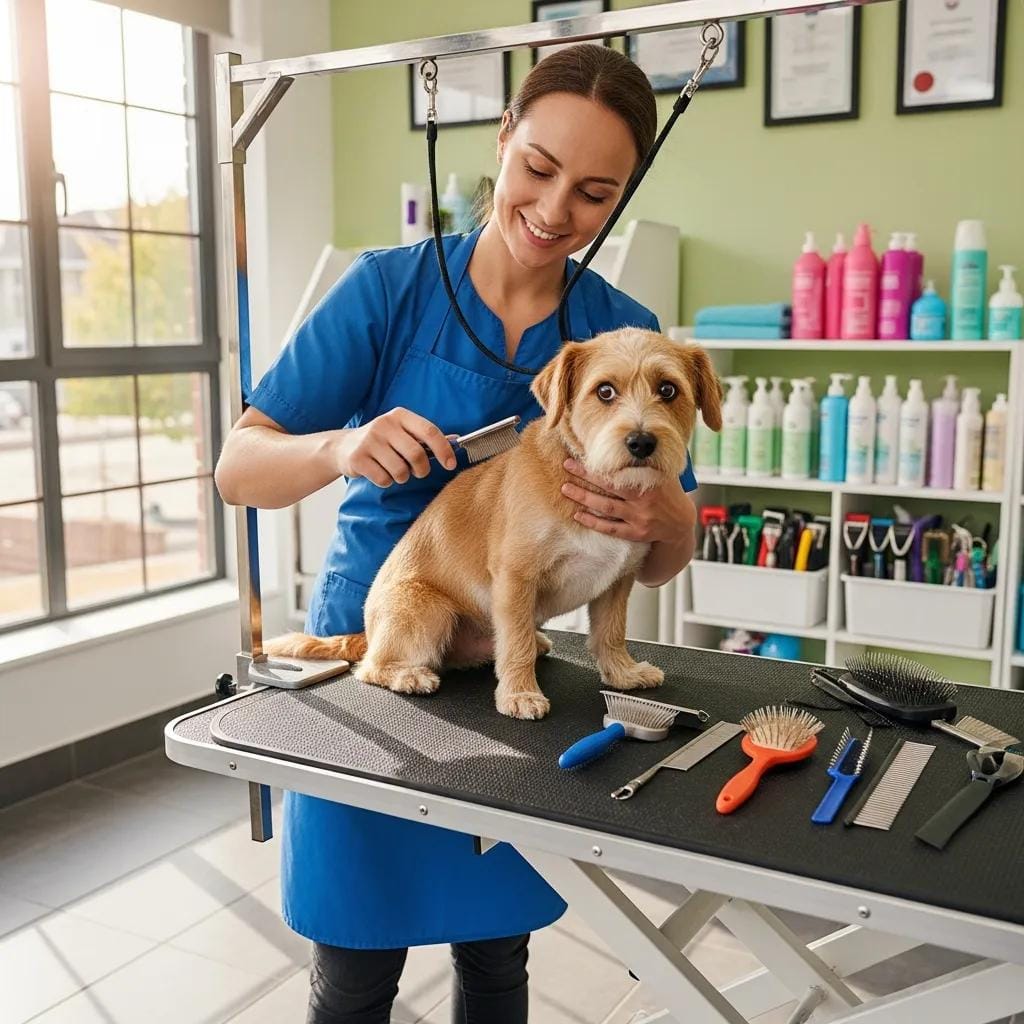
Dog grooming isn’t always calm, and every dog groomer eventually works with anxious, reactive, or aggressive dogs. Learning effective techniques for handling difficult dogs in grooming is essential for safety, smoother appointments, and better outcomes for both the dog and the professional.
A dog that growls, thrashes, bites, or shuts down isn’t being “bad” as much as they’re communicating stress, fear, or overwhelm.
Here, you’ll learn practical strategies for handling difficult dogs during grooming, including reading body language, reducing stress, using safe restraint appropriately, and building tolerance over time. Whether you’re new to the industry or sharpening your skills, these methods can help you stay in control, protect your team, and make challenging grooms more manageable.
Handling Difficult Dogs in Grooming Without Escalating Behavior
Why Dogs Act Up During Grooming
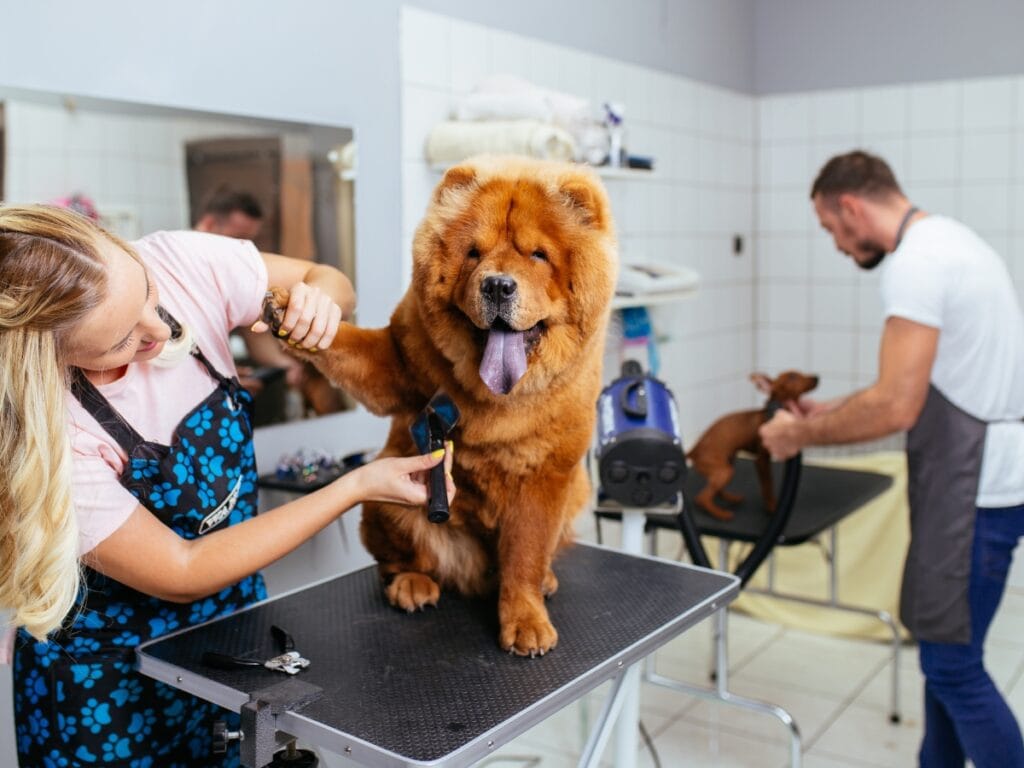
Dogs do not “misbehave” in the grooming room for no reason. Most resistance comes from fear, discomfort, or simply not understanding what is happening. Loud dryers, slippery tables, unfamiliar scents, and being restrained can all feel intense, especially for dogs that have not had much handling practice.
Some dogs are also sensitive about specific areas like paws, ears, or the face, so even gentle touch can trigger a strong reaction if they are worried or overstimulated. When you focus on handling difficult dogs through the lens of stress and safety, it becomes easier to respond with a plan instead of pushing through and hoping for the best.
A dog’s history matters, too. A rough dog grooming experience, a painful mat being pulled, or a past injury can make a dog anticipate that grooming equals discomfort. Even if you are careful, the dog may still react as if something bad is about to happen. The goal is to identify the likely trigger so you can adjust your approach. That might mean slowing down, changing tools, or breaking the session into shorter, manageable steps.
Common Reasons For Aggression And Anxiety In Grooming
Aggression and anxiety in grooming often look similar on the surface, but the cause can be different, and that difference matters. Fear-based reactions are common in dogs with limited socialization, dogs that have been forced through handling in the past, or dogs that feel trapped once restraint is introduced. These dogs are not trying to be “dominant.” They are trying to create distance from something that feels threatening.
Pain-based reactions are another major factor and are easy to miss if you assume the dog is simply being difficult. A dog with ear irritation may snap during ear cleaning, or a dog with arthritis may react when you lift a leg for trimming. Skin infections, hot spots, and matted coats can also make brushing feel sharp and unpleasant.
If a dog reacts suddenly to a step they previously tolerated, it is worth considering discomfort as a cause. In those cases, handling difficult dogs responsibly means adjusting pressure, changing the technique, and recommending medical follow-up when pain seems likely, rather than trying to overpower the reaction.
Lack of exposure is also a big piece of the puzzle. Dogs who have not been taught to accept touch, clippers, nail trims, or dryers may panic because the sensations are unfamiliar. With these dogs, progress usually comes from calm repetition, predictable routines, and rewarding cooperation, not from rushing.
How Canine Body Language Reveals Stress Signals
Canine body language is one of the most useful tools you have during grooming because it often warns you before the dog escalates. Subtle signs like lip licking, yawning, turning the head away, and a tight, closed mouth can signal discomfort.
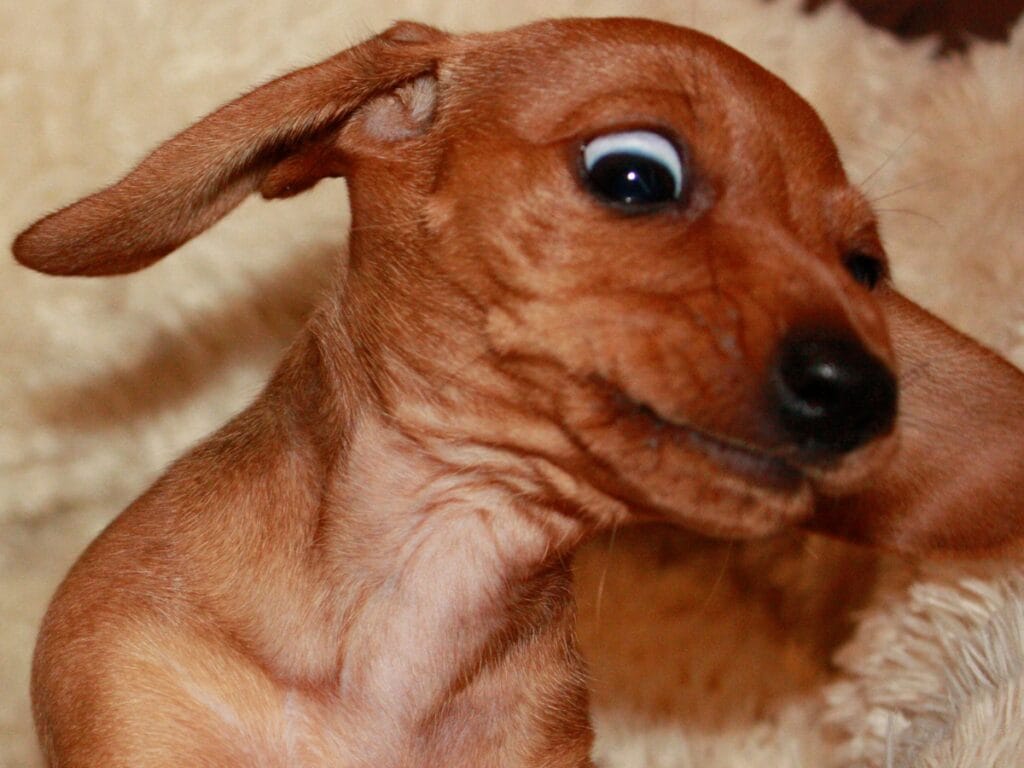
Flattened ears, a tucked tail, trembling, or a stiff posture are clearer signs that the dog is struggling. Whale eye, when you can see the whites of the eyes as the dog looks sideways, is another common signal that the dog feels pressured.
The key is to notice patterns. If stress signals show up every time you reach for the paws or bring clippers near the face, that tells you where to slow down.
Pausing for a moment, changing your position, lowering noise, or giving the dog a brief reset can prevent a small warning from becoming a bite attempt. When you treat these signals as communication, handling difficult dogs becomes safer and more effective, because you are responding early instead of reacting late.
How Groomers Can Recognize And Interpret Canine Stress Signals
Grooming asks a lot of a dog in a short period of time. They are on a table, handled in sensitive areas, and exposed to noises and sensations they may not understand. That is why consistent observation matters.
When you get better at reading posture and facial cues, you can catch discomfort early and prevent it from building into panic, thrashing, or snapping. In practical terms, this is one of the most important skills for handling difficult dogs, because it lets you respond before the dog feels pushed past their limit.
Stress signals are not always dramatic. Many dogs try subtle communication first, and those early signs are easy to miss when you are focused on the haircut or nail trim. The goal is to watch the whole dog, not just the area you are working on. Facial tension, breathing changes, and shifts in weight can tell you more than a growl ever will, because they show what is happening before the dog decides they need to defend themselves.
Key Stress Indicators Like Whale Eye And Lip Licking
Some indicators are well-known, but they still need context. Whale eye, when the dog shows the whites of their eyes while turning their head away, often signals discomfort or worry. Lip licking can be a quick self-soothing behavior, and yawning can show stress even when the dog is not tired. A tucked tail, a lowered head, pinned ears, and repeated attempts to lean away from you are also common warning signs.
It helps to think in combinations rather than single cues. One yawn on its own might not mean much, especially if the dog just arrived or is settling in. But if you see yawning paired with lip licking, a stiff body, and avoidance, that is a clear message that the dog is struggling. Heavy panting without obvious heat, sudden freezing, or a hard stare can also be signals that stress is escalating.
Over time, you will learn each dog’s baseline. Some dogs naturally pant more, and some are naturally more wiggly. What matters is change.
When a dog’s expression tightens, their movements become choppy, or they stop taking treats they usually accept, those shifts can tell you the dog is nearing their threshold. This kind of pattern spotting is central to handling difficult dogs safely and consistently.
Using Body Language To Prevent Escalation During Grooming
Once you notice stress building, your own body language becomes part of the solution. Dogs read movement and posture fast, so quick reaches, leaning over the dog, or holding direct eye contact can increase pressure.
Moving more slowly and working from the side, rather than hovering over the dog’s head, often reduces tension. Keeping your hands steady and your touch confident, not hesitant, can also help, since uncertainty can make some dogs more reactive.
Predictability is another calming tool. When steps happen in a similar order each time, the dog is less likely to be startled. Calm vocal cues can help as long as they are consistent and not overly loud or excited. Breaks matter too. A short pause to let the dog reset, change position, or take a breath can keep the session moving forward without forcing the dog to endure stress that keeps rising.
The biggest shift is treating stress signals as useful information, not interruptions. When you respond early by adjusting pace, pressure, or positioning, you lower the chance of escalation and create a grooming experience the dog can tolerate more easily. That approach protects the dog, the groomer, and the quality of the work.
Positive Reinforcement And Desensitization For Handling Difficult Dogs
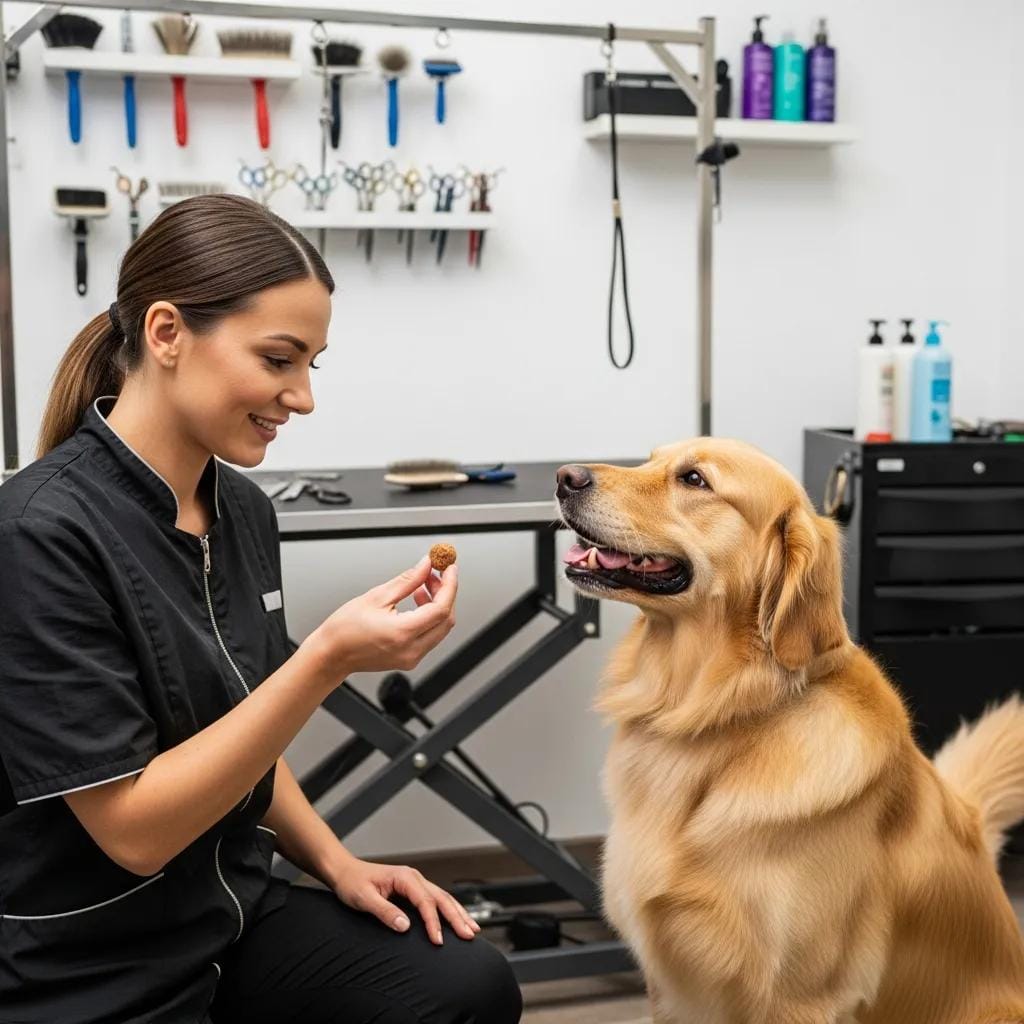
Positive reinforcement and desensitization are two of the most practical approaches for handling difficult dogs during grooming because they focus on changing the dog’s emotional response, not just managing behavior in the moment.
Many dogs resist grooming because the tools, sounds, restraint, or handling feel unpredictable or uncomfortable. When you build positive associations and introduce grooming steps gradually, you lower stress and increase cooperation over time. These methods are also low-risk and repeatable, which matters when you are working with dogs that have a history of anxiety, reactivity, or fear-based resistance.
The important point is that progress is usually measured in small wins. If a dog can stand calmly for a few seconds longer than last time, allow their paws to be touched without pulling away, or tolerate the sound of clippers at a distance, that is a real improvement.
When groomers treat these moments as the goal, rather than trying to finish everything as quickly as possible, the dog learns that grooming does not have to be a fight.
How Positive Reinforcement Improves Grooming Cooperation
Positive reinforcement works because it teaches the dog what to do instead of only showing them what not to do. In grooming, that usually means rewarding calm, still behavior and giving the dog a clear reason to keep cooperating. Rewards can be high-value treats, calm praise, or a brief pause that gives the dog a chance to reset.
The timing matters just as much as the reward itself, because the dog needs to connect the reward to the exact behavior you want more of, such as holding still for brushing or relaxing when you touch a sensitive area.
Consistency is where this approach either succeeds or falls apart. If calm behavior earns a reward sometimes, but other times the dog is pushed through a step while they are escalating, the dog learns that stress is part of the routine.
When the dog experiences a predictable pattern, calm equals reward, tense behavior leads to a pause and an easier step, they start offering calmer responses sooner. For handling difficult dogs, this consistency helps build trust, which is often the missing piece in challenging grooming sessions.
Effective Desensitization Steps For Grooming Tools
Desensitization is about introducing grooming triggers in a way that keeps the dog under their stress threshold. Instead of starting with the tool in motion or bringing it straight to the dog’s face or paws, you begin with neutral exposure. Let the dog see the tool while it is still, then reward calm investigation. Once the dog can look at it or sniff it without tensing up, you can increase the challenge gradually.
For example, you might hold clippers near the dog without turning them on, reward calm behavior, then move them away. Next, you might turn them on at a distance, reward calmness, and turn them off.
Over time, you shorten the distance and increase the duration, always watching for signs that stress is rising. The same approach can work for dryers, nail grinders, brushes, and even the act of being gently restrained. The goal is not to “get it over with.” The goal is to build tolerance in a way that sticks.
When desensitization is done well, you often see fewer sudden reactions because the dog is not being surprised. That is why many trainers and groomers rely on it for fear-based behavior issues, and why it is frequently supported in animal behavior research and field practice as a way to reduce stress and improve emotional responses.
In day-to-day grooming, it becomes one of the most reliable tools for handling difficult dogs safely while setting them up for better sessions in the future.
Safe and Humane Restraint Methods for Difficult Dogs
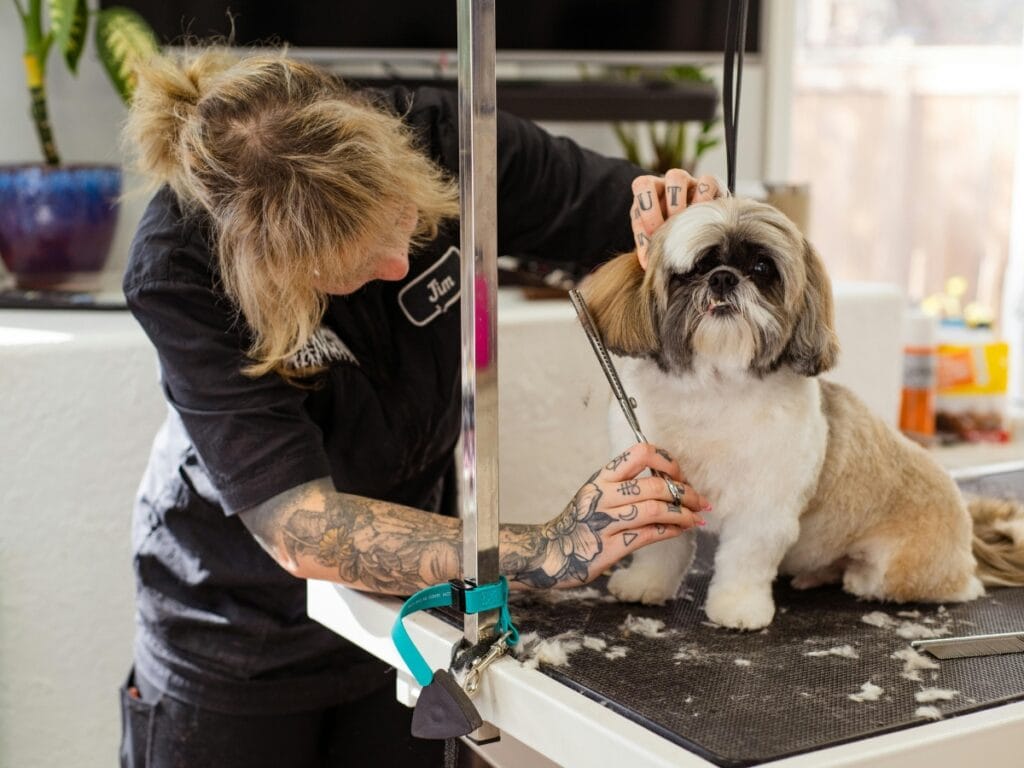
Some dogs can be coached through grooming with patience, breaks, and reinforcement, but there are times when safety has to take priority. If a dog is anxious to the point of thrashing or aggressive enough that a bite is likely, humane restraint can help you keep the session controlled without escalating fear.
The goal is not to “hold the dog down” or push through at any cost. The goal is to reduce risk while keeping the dog as comfortable as possible, and to use restraint only when it genuinely supports safe handling. For groomers focused on handling difficult dogs, restraint should be a last-resort support, not the default plan.
Humane restraint works best when it is paired with calm handling and clear boundaries. If the dog is already overwhelmed, adding pressure, rushing, or tightening equipment too much can make the reaction worse. When restraint is used thoughtfully, it can prevent sudden movements that lead to injury, and it can give you a safer window to complete only the essentials.
Using Muzzles And Belly Straps Safely In Grooming
A properly fitted muzzle can be a practical safety tool for dogs that are likely to bite, but fit and introduction are everything. The muzzle should allow the dog to breathe normally and pant, especially in a warm grooming environment where stress can raise body temperature.
Many dogs panic if a muzzle appears suddenly and is fastened quickly, so acclimation matters. Even a short introduction where the dog sees the muzzle, sniffs it, and receives a reward can reduce resistance. Over time, the dog learns that the muzzle predicts something manageable rather than something scary.
Belly straps and grooming loops can also help, but they must be used correctly. A grooming loop should stabilize the dog without tightening around the neck or placing pressure on the throat. A belly strap can support balance and reduce sudden sitting or spinning, which is helpful for anxious dogs that cannot settle on the table. The key is supervision and frequent checks.
If the dog is leaning heavily into the equipment, struggling against it, or showing signs of distress, the setup needs to be adjusted, or the session needs to change direction. Tools should support safe positioning, not force compliance.
For handling difficult dogs, restraint equipment should always be paired with calm reinforcement. Reward the dog for brief moments of stillness, lower the intensity of what you are doing, and keep your movements predictable. Even when you need the extra safety margin, you can still help the dog feel less trapped by working in short intervals and giving small resets.
When To Stop Or Modify Handling
Knowing when to pause is just as important as knowing how to restrain safely. If you see stress climbing into sustained growling, snapping, frantic attempts to escape, or heavy panting that does not settle, it is time to reassess. Pushing through those signals increases the chance of injury and often makes the next appointment harder, because the dog learns that escalating behavior is part of the grooming pattern.
In many cases, modifying the plan is the best option. That might mean switching to a lower-stress step, skipping non-essential work, or ending early and trying again on another day with a gradual approach.
Stopping does not mean failure. It often means you made the safer choice for the dog and the handler. In the long run, that decision helps preserve trust, which is one of the biggest factors in handling difficult dogs successfully over time.
Strategies For Grooming Anxious And Fearful Dogs
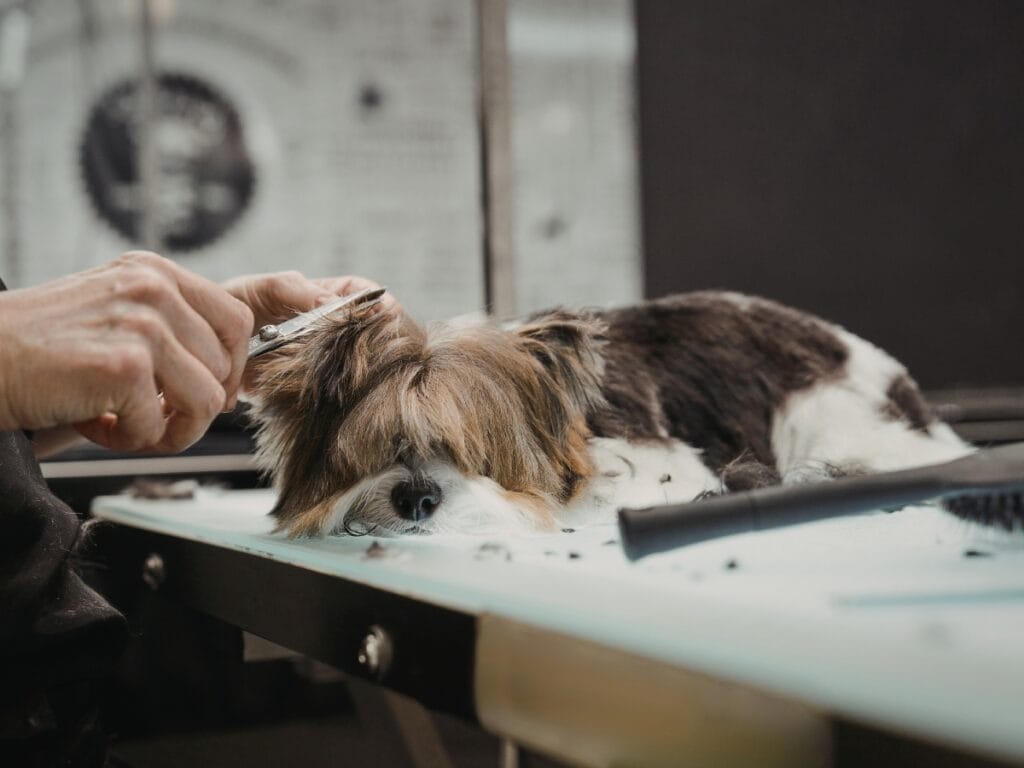
Anxious dogs are not trying to make grooming difficult, they are trying to cope with a situation that feels unsafe. For some dogs, the grooming room is full of triggers: unfamiliar smells, slippery surfaces, restraint, and equipment that makes loud or high-pitched noise.
When you approach these dogs with a calm process and realistic expectations, you can reduce stress in the moment and make future sessions easier. The most reliable approach to handling difficult dogs is to think in small, repeatable steps instead of aiming for a perfect groom in one visit.
Fearful dogs often do best when the session has a predictable rhythm. If each appointment follows the same general order, with pauses built in, the dog starts to understand what is coming next. That predictability matters because surprise is one of the biggest drivers of panic. Over time, these dogs can build confidence, but only if the experience stays within what they can tolerate.
How To Create A Calm Environment To Reduce Anxiety
The environment sets the tone before you even touch the dog. Reducing noise and sudden activity can make a noticeable difference, especially for dogs that are sound-sensitive. If possible, keep dryers and clippers out of the dog’s immediate space until you are ready to use them.
A quieter area, lower lighting, and a clean, uncluttered workspace can also reduce sensory overload. Many anxious dogs react to constant movement around them, so limiting foot traffic near the table helps them settle.
Your handling style is part of the environment, too. Slow, steady movements and a neutral posture often read as less threatening than leaning over the dog or reaching quickly from above. It also helps to give the dog a moment to take in the room before starting. Rushing straight into restraint can raise anxiety fast, which then affects everything that follows.
Some groomers use calming add-ons like pheromone diffusers or anxiety wraps. These are not magic fixes, but they can lower baseline stress for certain dogs when paired with gentle handling and a slower pace.
If you use them, the goal is support, not sedation. When you are working on handling difficult dogs, the best results usually come from combining a calmer space with better timing, better observation, and fewer surprises.
Breaks And Tool Introductions That Help Fearful Dogs
Breaks are not wasted time for fearful dogs. They give the dog a chance to reset, and they prevent stress from stacking up until the dog cannot cope. Even a short pause can help, especially after a challenging step like paw handling, nail work, or face trimming. The key is to use breaks strategically, before the dog hits a breaking point, not after they are already panicking.
Tool introduction matters just as much as breaks. Start with the least invasive tools and build up gradually as the dog shows comfort. For example, a brush or comb is often easier to tolerate than clippers or a high-velocity dryer.
Let the dog see and sniff unfamiliar items, then reward calm behavior before you use the tool. When you move to louder equipment, begin at a lower intensity or farther away, and increase exposure in small increments.
Patience pays off here because each positive exposure changes the dog’s expectation. Instead of learning that grooming always escalates, the dog learns that calm behavior leads to predictable handling and relief. That is the foundation for handling difficult dogs in a way that protects safety and builds long-term cooperation.
Safe and Humane Restraint Methods for Difficult Dogs
Learning the technical side of grooming is only part of the job. Many appointments become challenging because a dog is anxious, reactive, or uncomfortable with handling, and that is where real-world dog grooming training matters.
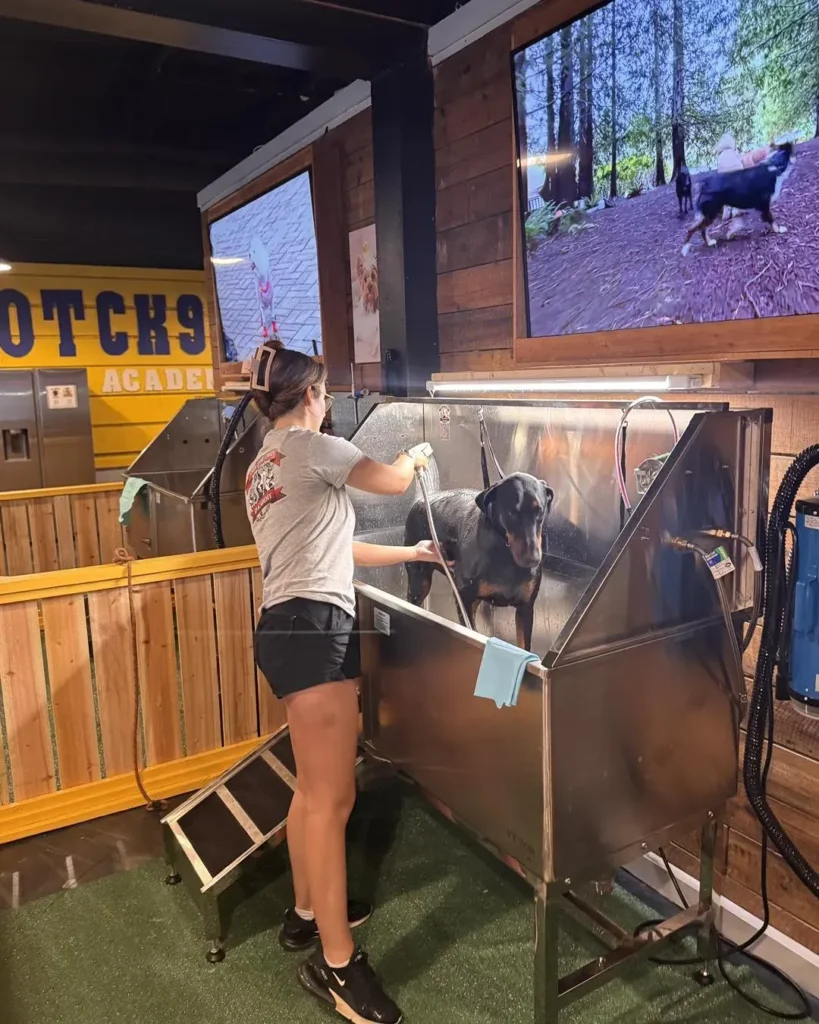
OTCK9 Grooming School emphasizes practical skills that help students stay safe, stay calm, and make better decisions when a dog is stressed. The focus is not on forcing compliance, but on building a process for handling difficult dogs in a way that protects both the dog and the groomer.
A key piece of professional growth is learning to recognize what you are seeing in the moment. A dog that freezes, pants heavily, or pulls away is giving information, and the groomer’s job is to interpret it correctly.
Students are taught to look beyond the surface behavior and consider common drivers like fear, over-arousal, lack of exposure, or possible discomfort. That shift in mindset helps new groomers avoid the trap of using one approach for every dog, which rarely works for challenging cases.
Behavior Focused Curriculum Skills Taught
The curriculum is built around behavior awareness and practical responses that can be used in day-to-day grooming. Students learn how to read canine body language, including early stress signals that show up before a dog escalates.
This includes noticing changes in posture, facial tension, avoidance, and signs that a dog is nearing their threshold. The goal is to respond early by adjusting pace, changing positioning, or breaking a task into smaller steps.
Training also includes reinforcement-based handling, which means rewarding calm, cooperative behavior in real time. Done consistently, positive reinforcement helps dogs learn what earns relief or rewards, and that can improve cooperation over multiple visits.
Students also learn the basics of desensitization, which involves gradual exposure to tools and sensations while keeping the dog under their stress threshold. In grooming, that might look like introducing clippers at a distance before bringing them closer, or touching paws briefly before attempting nail work. These are core strategies for handling difficult dogs without escalating fear.
How Hands-On Training Builds Confidence With Challenging Dogs
Hands-on labs are where classroom concepts become usable skills. c and practice under supervision helps students learn how to stay steady with their hands, manage their own energy, and work with a plan instead of reacting to every movement.
Supervised practice also builds judgment, which is often the difference between a safe session and a risky one. Knowing when to pause, when to switch techniques, and when to stop entirely is part of responsible grooming, especially with fearful or reactive dogs.
Students practice humane restraint fundamentals as well, including safe use of grooming loops, belly supports, and properly fitted muzzles when needed. The emphasis stays on minimizing stress, maintaining comfort, and using the least amount of restraint necessary for safety. When restraint is introduced with calm handling and correct fit checks, it can prevent injury without turning the session into a struggle.
In the end, professional grooming requires a mix of technical ability and behavioral insight. When groomers are trained to read stress signals, use reinforcement, apply gradual tool introductions, and make safety-first decisions, grooming becomes more predictable for everyone involved. That is the value of training that treats handling difficult dogs as a core skill, not an afterthought.
Frequently Asked Questions
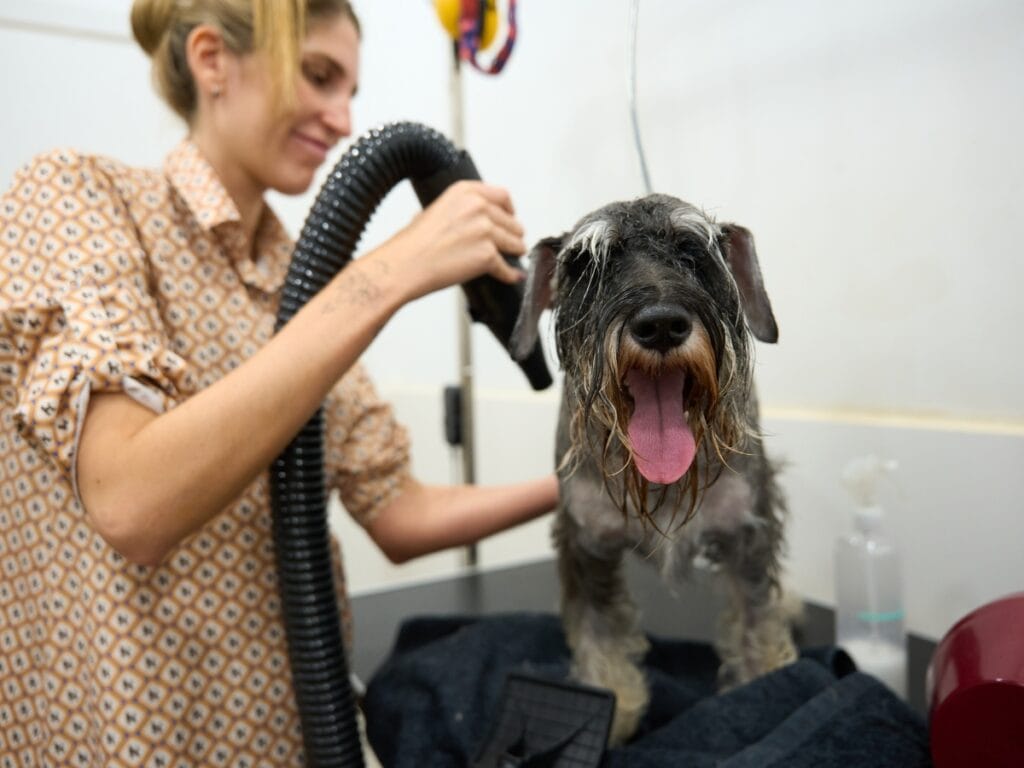
What Are The Signs That A Dog Is Feeling Stressed During Grooming?
Stress shows up in small ways before it turns into snapping or thrashing, so it helps to watch for patterns. Repeated lip licking, yawning, whale eye, lowered posture, a tucked tail, heavy panting, or repeated attempts to move away are all common signals.
One sign by itself might not mean the dog is in trouble, but a cluster of cues usually does. When you notice stress building, slowing down, changing your position, or taking a short pause can prevent escalation. This is a core part of handling difficult dogs safely because it lets you respond early instead of waiting until the dog is overwhelmed.
How Can Groomers Effectively Introduce Grooming Tools To Anxious Dogs?
Tool introductions work best when they are gradual and paired with something the dog values. Start by letting the dog see and sniff the tool while it is not in use, then reward calm interest.
Once the dog is comfortable, use the tool briefly in a low-pressure way, such as touching the coat lightly without immediately clipping or trimming. As the dog tolerates that step, you can slowly increase duration, proximity, or sound.
The goal is steady progress at the dog’s pace, not forcing a fast adjustment. This stepwise approach is one of the most reliable methods for handling difficult dogs because it reduces surprise and builds tolerance over time.
What Role Does The Environment Play In Calming Anxious Dogs During Grooming?
The environment has a bigger impact than many people realize. Noise, sudden movement, and a busy workspace can raise arousal even before grooming begins. A quieter setup with less foot traffic, soft lighting, and calming background sound at a low volume can help some dogs settle faster.
Keeping tools out of sight until you need them and moving steadily instead of rushing also lowers pressure. Environmental changes do not replace good technique, but they support it, especially when a dog is already on edge.
How Important Is It For Groomers To Recognize When To Stop Handling A Dog?
It is critical. Continuing when a dog is clearly overwhelmed increases the risk of injury and can make the next session harder because the dog learns that grooming always ends in panic.
If the dog shows sustained growling, snapping, frantic escape attempts, or intense panting that does not settle, it is a sign to pause and reassess. Sometimes the safest decision is to end early, focus on essentials only, or return with a modified plan. Choosing to stop can protect trust, which is often the key to improving future appointments.
What Techniques Can Groomers Use To Build Trust With Difficult Dogs?
Trust comes from predictability and small successes. Dogs do better when the routine is consistent, handling is gentle but confident, and calm behavior is rewarded. Short sessions that end on a manageable note often help more than pushing for a perfect finish.
Over time, gradual exposure to tools and touch teaches the dog what to expect and reduces fear. This is why handling difficult dogs is rarely about one trick. It is about building a pattern that the dog can tolerate and eventually accept.
How Can Breaks During Grooming Sessions Benefit Fearful Dogs?
Breaks give fearful dogs time to decompress and prevent stress from stacking up. A short pause after a challenging step can help the dog return to a calmer state, which makes it easier to continue safely.
Breaks also create space to reward cooperation, reposition the dog, or switch to an easier task before returning to something more difficult. Used well, breaks improve the overall flow of the appointment and can reduce the chance of escalation.
What Is The Significance Of Hands On Training In Grooming Schools?
Hands-on training is where theory becomes usable skill. Working with live dogs under supervision helps students learn timing, safe positioning, and how to adjust their approach when a dog is nervous or reactive. It also builds judgment, including when to slow down, when to modify a plan, and when to stop.
That real-world practice is essential for handling difficult dogs because it prepares groomers for the variability that shows up in everyday appointments.
Conclusion
Mastering the techniques for handling difficult dogs is what separates a good groomer from a truly exceptional one. It requires patience, keen observation, and a deep understanding of canine behavior to ensure both safety and a positive experience for the animal.
At OTCK9 Grooming School, our certification program goes beyond basic grooming skills to teach you the advanced handling methods needed to confidently manage any temperament. Ready to build the skills and confidence for a thriving grooming career? Call 770-874-1803 or fill out our online form for a free quote today. Let us equip you with the expertise to handle every dog with care and professionalism.