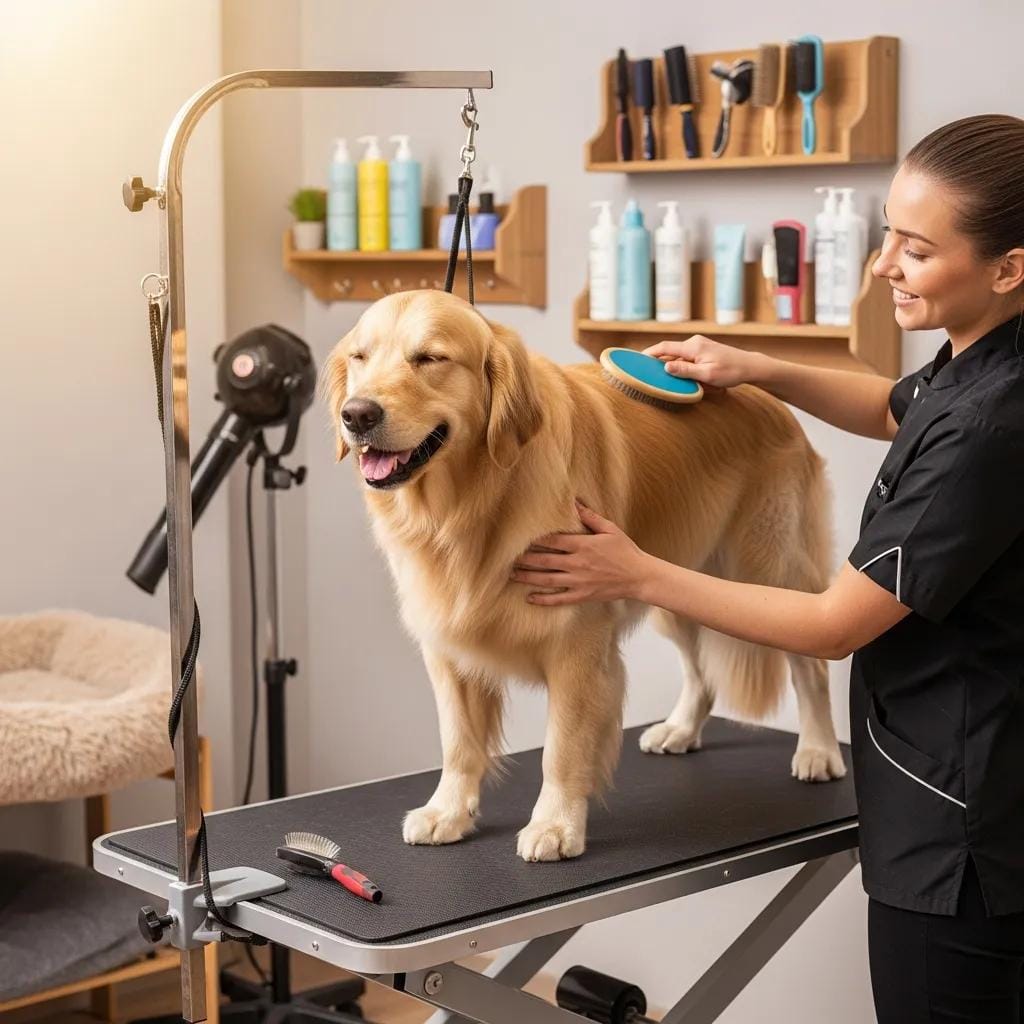
Grooming can be overwhelming for many dogs, especially in a busy salon environment filled with unfamiliar sounds, scents, and handling. While some pets tolerate the process with ease, others communicate discomfort in subtle ways long before growling or snapping. Knowing how to recognize stress signals in dogs during grooming is essential for preventing escalation and keeping both the dog and groomer safe.
Stress often shows up through body language such as lip licking, yawning, trembling, tucked tails, stiff posture, or avoiding eye contact. If these early warning signs are missed, anxiety can intensify quickly. By identifying stress cues early, dog groomers can adjust their approach, slow the session, or provide calming support.
Understanding these stress signals not only protects everyone involved but also builds trust, creating a more positive grooming experience over time.
Recognizing Stress Signals in Dogs During Grooming Before It Turns Reactive
Identifying and Managing Stress Signals in Dogs During Grooming

Grooming can be stressful for dogs even when nothing “bad” is happening. They are being handled, restrained, exposed to unfamiliar sounds, and asked to tolerate tools near sensitive areas like feet, ears, and face.
When stress builds, a dog’s body language usually changes before behavior escalates. Spotting those signals early helps groomers slow down, change their approach, and keep the appointment safer for everyone.
Many grooming incidents start with missed early cues. A dog may not growl or snap right away. Instead, you may see tension in posture, a change in breathing, an increase in fidgeting, or repeated calming signals like lip licking.
When you notice these patterns, you can adjust handling, offer a break, or switch to a less stressful step before the dog reaches its limit. Even the way you introduce cleaning tools matters, since loud clippers, high-velocity dryers, and unfamiliar scents can push a nervous dog into overload.
Which Common Canine Stress Behaviors Should Groomers Watch For?
One of the clearest stress behaviors is avoidance. A dog that keeps turning away, backing up, or trying to tuck behind you is communicating discomfort. This can look subtle at first, like leaning away from the table edge or pulling the head back when you reach for the collar, but it is often the first sign the dog is no longer coping well.
Cowering or crouching is another strong signal. Dogs that lower their body, flatten their ears, or tuck their head may be fearful, especially if they appear “small” and still. Freezing can also show up, where a dog suddenly stops moving and becomes rigid. Freezing is often misunderstood as compliance, but it can mean the dog is overwhelmed and close to reacting.
Vocalizations can be a stress signal too. Whining, high-pitched barking, or sudden yelps may indicate anxiety, discomfort, or fear. Some dogs become noisier as a way to protest handling, while others become quiet and tense. Both patterns matter. If a dog starts panting heavily without heat or exertion, or if breathing becomes shallow and fast, it is often a stress response.
You may also see displacement behaviors like sudden scratching, sniffing the air, shaking off as if wet, or repetitive paw lifting. These can be “pressure release” behaviors that show the dog is trying to self-soothe. When they happen repeatedly during grooming, it is a sign to reassess the pace, your handling, and how you are using cleaning tools around sensitive areas.
How Do Tail Position, Lip Licking, And Yawning Signal Anxiety?
Tail position can tell you a lot, but it needs context. A low or tucked tail is commonly associated with fear or uncertainty. A tail that is held low with a slow, stiff wag can also signal conflict, where the dog is unsure and trying to cope. In grooming, this often shows up when you approach with cleaning tools the dog dislikes, such as nail grinders, clippers near the face, or a dryer hose.
Lip licking is one of the most common stress cues and one of the easiest to miss. If a dog repeatedly licks its lips when there is no food present, it is often a calming signal. You may see it when you reach toward the dog’s head, pick up a paw, or move a tool close to the muzzle. It can also appear alongside a tense mouth, pinned ears, or a furrowed brow. When lip licking increases, it is often a sign the dog needs a slower pace or a short reset.
Yawning is another calming signal that can be mistaken for boredom. A single yawn can be normal, but repeated yawning during handling is often a sign of discomfort or stress.
Dogs may yawn when they are anticipating something unpleasant, when restraint feels too tight, or when a noise like clippers or a dryer is triggering. If yawning stacks with other signs like a tucked tail, whale eye, or stiff posture, the dog is likely having a harder time than it appears.
The most useful approach is to look for clusters, not single signals. A dog that briefly licks its lips once may be fine. A dog that repeatedly lip licks, yawns, avoids contact, and shows a low tail is communicating that grooming is becoming too much. When you respond early, you often prevent escalation.
That can mean switching to a quieter setting, changing your handling position, giving a short break, or introducing cleaning tools more gradually so the dog can stay regulated throughout the appointment.
How Can Groomers Safely Calm Stressed Dogs During Grooming Sessions?

Grooming asks a lot from a dog in a short period of time. They are handled in unfamiliar ways, asked to tolerate noise, and sometimes restrained in positions that feel uncomfortable.
When stress builds, most dogs give stress signals long before they growl, snap, or shut down. A calm session is less about “getting through it” and more about noticing those early shifts and responding before the dog reaches a breaking point.
Low-stress handling approaches, including Fear Free-style principles used in veterinary and handling settings, generally focus on reducing fear triggers, increasing predictability, and using gentle handling that keeps the dog under threshold.
Research in clinical settings has also explored how low-stress handling can affect behavioral and physiological indicators of stress, supporting the idea that handling style can change a dog’s experience in a meaningful way.
The most practical takeaway for groomers is simple: your pace, touch, and setup matter just as much as your skill with tools. When you build in calmer transitions and respect stress signals early, dogs tend to cooperate more, appointments stay safer, and you often get better grooming results because the dog is not fighting every step.
What Calming Techniques And Handling Tips Reduce Canine Anxiety?
Start with your approach. A quiet voice, slower movements, and a gentle, steady touch help a dog understand that nothing is about to “pounce” on them.
Many dogs escalate when groomers move quickly from task to task, especially around the face, feet, or tail. If you notice the dog stiffening, leaning away, lip licking, or repeatedly yawning, treat those stress signals as information and slow down rather than pushing through.
Predictability is calming. Before you pick up clippers, a brush, or nail tools, let the dog see the item and smell it briefly, then pair it with a calm pause. That pause matters because it gives the dog a chance to process. If you move the tool to the body immediately, anxious dogs often brace, tense, or start trying to escape. A short “show, pause, touch lightly” pattern can reduce the surprise factor that drives stress.
Breaks are not a reward for “bad behavior.” They are a regulation tool. If a dog starts panting heavily, pulling away, or becoming frantic, a short break can prevent escalation.
During the break, reduce handling and lower stimulation. You can step away slightly, soften your posture, and give the dog a moment to stand or sit without pressure. A brief reset can bring breathing down and reduce the intensity of stress signals.
Familiar scents and objects can help some dogs, especially puppies or dogs who struggle with new environments. If an owner brings a familiar blanket or toy, it can provide a small anchor during transitions. Even without items from home, consistency helps. Using the same grooming table setup, the same order of steps, and the same calm handling cues can make the session feel more predictable over time.
How Do You Read Stress Signals Before They Escalate?
It helps to watch for clusters rather than one isolated behavior. A single yawn can be normal. Repeated yawning paired with lip licking, whale eye, or a tucked tail is a different message. Many dogs show early stress signals through subtle tension: a hard mouth, ears pinned back, a closed, stiff posture, or a head that pulls away when your hand approaches.
Movement changes matter too. A dog that was standing normally may start shifting weight from paw to paw, lifting a paw, or trying to sit suddenly. Some dogs freeze and become very still. Freezing is often mistaken for cooperation, but it can indicate the dog is overwhelmed and deciding whether to defend themselves.
The key is to treat stress signals as feedback on your current pace, handling, and tool introduction. When you respond to early cues, you reduce the odds of getting the late-stage signals like snapping, thrashing, or full shutdown.
When Should Groomers Pause Or Stop Grooming A Stressed Dog?
Pausing is appropriate when stress signals increase in intensity or frequency. If the dog begins constant struggling, repeated attempts to escape restraint, or sudden stiffening paired with a hard stare, that is a strong indicator that the dog is no longer coping. Continuing in that moment increases the risk of injury and makes future appointments harder because the dog learns that stress does not change anything.
You should also pause if stress looks like distress. Heavy panting that does not settle, excessive drooling, trembling, or frantic movement can signal that the dog is overwhelmed.
Vocalizing can be part of this, too, especially if it changes from mild whining to sharp, urgent sounds. If you suspect pain, such as a dog reacting strongly when a specific area is touched, the safest choice is to stop that step rather than forcing completion.
A good standard is this: if calming steps and a short break do not reduce stress signals, the session should shift toward safety.
That might mean doing only what the dog can tolerate that day, rescheduling with a different plan, or recommending a slower desensitization approach over multiple visits. Protecting the dog’s emotional threshold protects your safety too, and it builds long-term trust that makes future grooming easier, not harder.
What Are The Essential Grooming Safety Practices To Prevent Stress In Dogs?
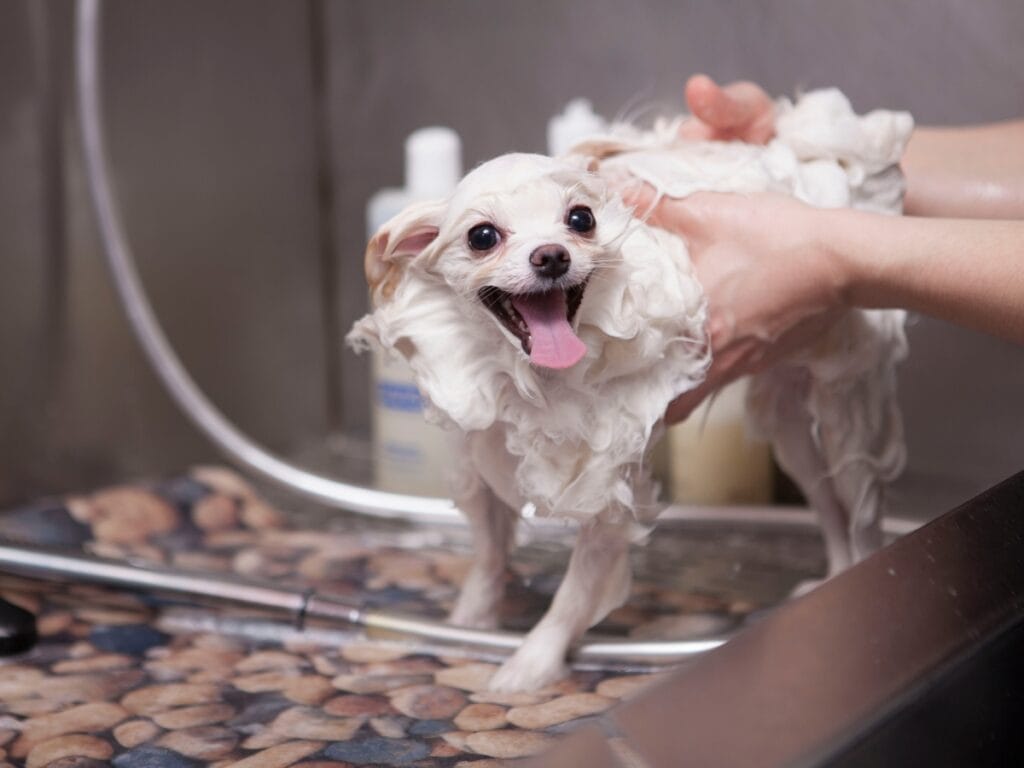
A “safe” grooming session is not just about avoiding nicks or cuts. It is also about preventing emotional overload that can lead to struggling, fear biting, or long-term grooming aversion. Dogs rarely go from calm to panicked with no warning.
They usually show stress signals early, and the groomer’s job is to notice those cues and adjust before the dog crosses their threshold. When grooming is handled with a safety-first mindset, dogs tend to tolerate more over time because they learn the experience is predictable and manageable.
The foundation of grooming safety is simple: reduce surprises, keep the dog stable on the surface, and choose handling methods that protect the dog’s body and sense of control. This is especially important for nervous dogs, puppies, seniors, and dogs with pain or mobility issues.
A slower, more cooperative approach often gets better results than trying to power through a full groom when the dog is telling you they are not okay.
Which Tools And Procedures Promote A Stress-Free Grooming Environment?
Tools matter because many stress reactions are triggered by sound, vibration, and sensation. Quieter clippers can help reduce startle responses, especially around the face, ears, and paws.
Dogs that tolerate brushing may still react to clipping because the sensation and noise are different. Starting clippers away from the dog, letting them hear the sound briefly, and then approaching slowly can prevent stress signals from stacking early in the session.
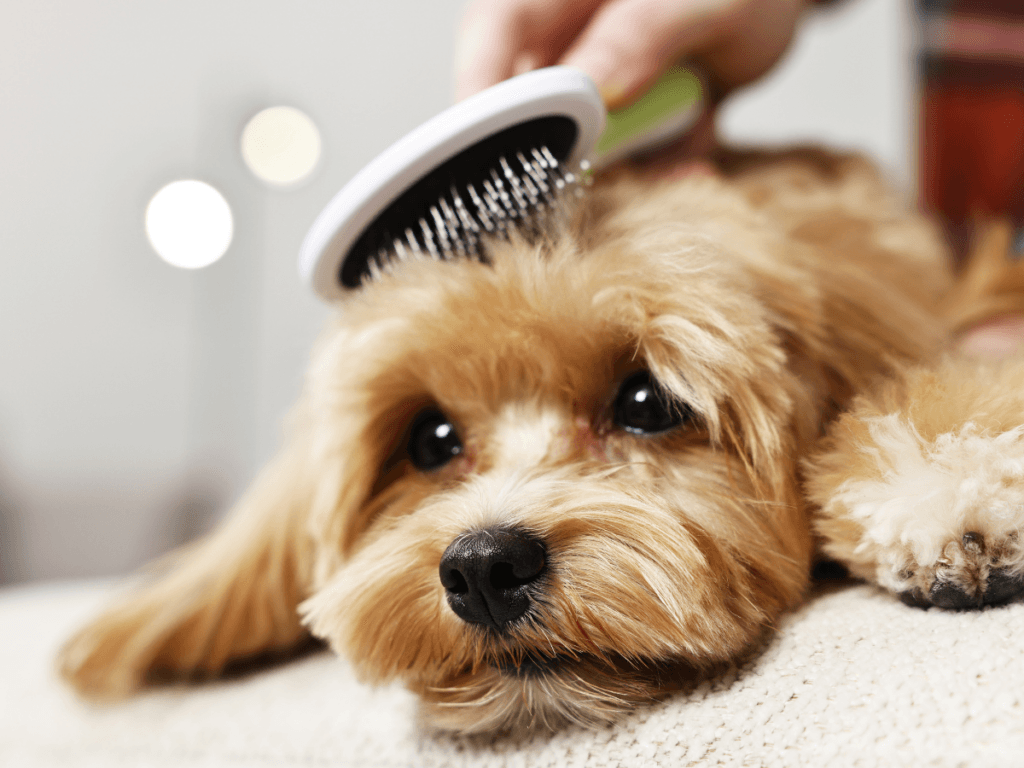
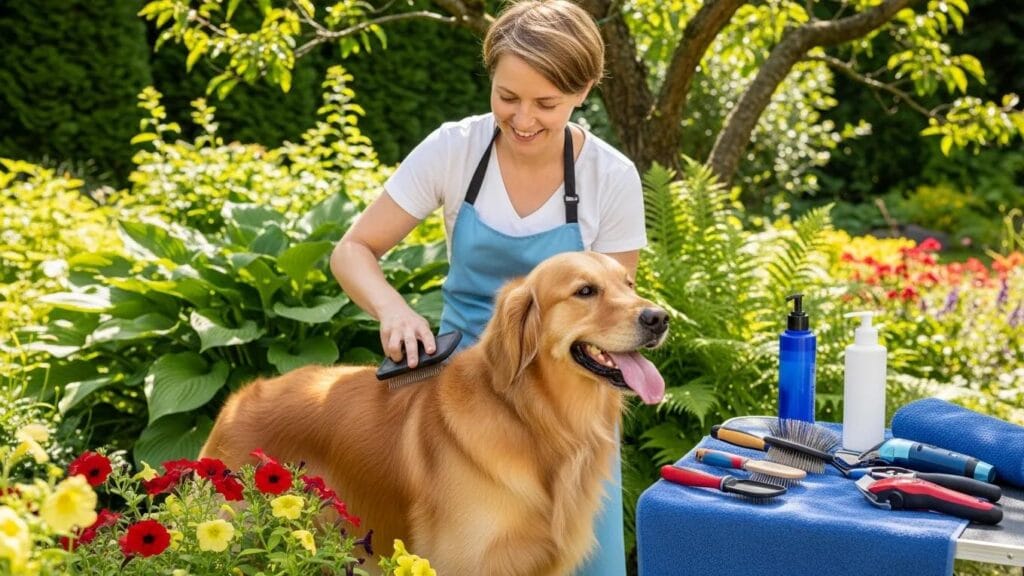
Soft brushes and appropriately sized combs are also important. Rough brushing can create discomfort, especially if the coat is matted or the dog has sensitive skin. Gentle tools paired with short sessions tend to keep the dog calmer and reduce the chance of sudden flinching or pulling away.
When a dog starts to lip lick, turn their head away, or tense their shoulders during brushing, those stress signals are often telling you the pressure is too much, or the area is too sensitive.
Stability is another big factor. Non-slip mats on tables and in tubs help dogs feel secure. Many dogs become anxious simply because their footing feels uncertain, which can look like shaking, crouching, or constant repositioning. Improving traction often reduces stress signals quickly because the dog no longer feels like they might slip.
Procedures matter just as much as equipment. One of the most important is pacing. Breaking a groom into clear steps with small pauses in between can keep arousal from building.
For example, a quick pause after brushing one side, or a short reset before switching to paw work, gives the dog a moment to regulate. During these resets, the goal is not “more handling.” The goal is less pressure, a calmer posture from the groomer, and a chance for the dog’s body to soften.
Handling choices also impact safety. Cooperative methods and harness-based control are often safer than relying heavily on neck restraints, especially for dogs that panic or pull. Neck devices can increase stress in some dogs and can create a risk if a dog twists or lunges.
Using a properly fitted harness, allowing more natural positioning, and giving the dog more choice through small consent checks can reduce stress signals and improve cooperation. Even simple changes like supporting the dog’s chest during repositioning or avoiding sudden head control can make a session feel safer for the dog.
How Does Understanding Dog Behavior Enhance Grooming Safety?
Reading dog behavior is what turns “basic grooming” into truly safe grooming. When you understand what stress signals look like, you can intervene early instead of reacting late.
Early signals include lip licking when no food is present, repeated yawning, turning the head away, pinned ears, a tucked or low tail, and a stiff, closed mouth. Some dogs will freeze and become very still, which can be mistaken for good behavior. In many cases, freezing is a sign that the dog is overwhelmed and trying to cope.
As stress rises, signals often become more obvious. The dog may start panting heavily, vocalizing, trembling, or trying to climb off the table. You may see whale eye, where the whites of the eyes show, or a hard stare paired with a rigid body. These are not moments to push through. They are moments to pause, reset the environment, and decide whether the session should continue in a modified way.
The more consistently a groomer responds to stress signals with calmer pacing and safer handling, the more trust is built over time. That trust pays off in future visits because the dog learns that their signals are noticed and that grooming does not have to feel like a trap. In practical terms, better behavioral awareness leads to fewer incidents, smoother grooms, and a safer experience for both the dog and the groomer.
How Does Professional Grooming Training Help Recognize And Manage Dog Stress?
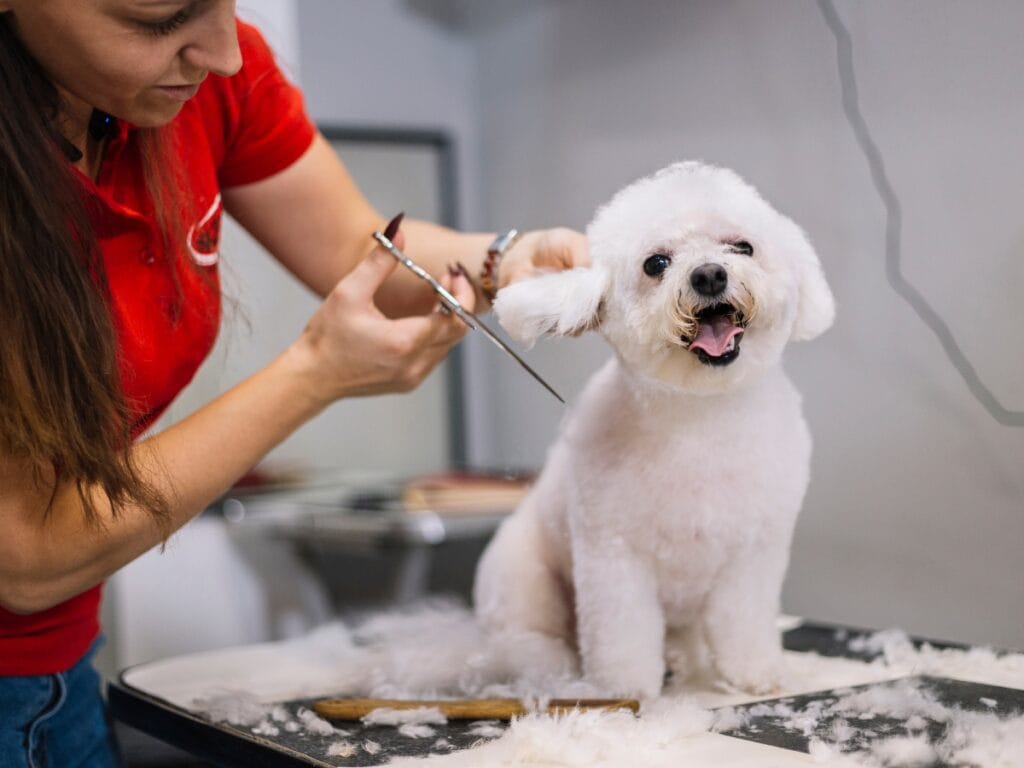
Professional grooming is not just about coat care. It is also about handling, timing, and making decisions that keep a dog safe and regulated throughout a session. Training helps groomers recognize stress signals earlier, which is often the difference between a smooth appointment and one that escalates.
Many dogs show discomfort in subtle ways long before they growl or snap. Without training, those early signals can look like “wiggly behavior” or “being stubborn.” With training, groomers learn to read the pattern and respond in a way that keeps the dog under threshold.
Good training also changes how groomers structure a groom. Instead of pushing through a full checklist, groomers learn to adjust order, pace, and handling based on what the dog is communicating.
That is where stress signals become practical information, not just something to notice after the fact. When groomers can identify which step is triggering anxiety and why, they can make real-time changes that reduce risk and build trust over repeat visits.
What Career Training Programs Teach Canine Stress Signal Recognition?
Many career training paths include behavior education, but the best programs treat it as a core skill rather than an add-on. Certification-style courses often cover canine communication basics, including how stress signals show up in posture, facial expression, and movement.
These programs typically teach groomers how to spot early signs like lip licking, yawning, head turns, pinned ears, and body stiffening, then connect those signals to practical handling choices.
Workshops and hands-on training can be especially valuable because body language is easier to learn when you can see it in real time. In a live setting, trainees can watch how dogs respond to different types of touch, restraint, noise, and tool exposure.
That kind of practice helps groomers build timing. It also helps them learn what “normal” looks like for different temperaments so they can notice stress signals faster.
Online training can be helpful as a foundation, especially for learning terminology, common stress patterns, and safety planning. A good online course goes beyond simple lists and explains context.
For example, a wagging tail does not always mean a dog is happy, and freezing does not always mean a dog is calm. When online lessons are paired with real-world practice, groomers become more confident in reading dogs and more consistent in how they respond.
How Do Veteran Grooming Programs Incorporate Behavioral Awareness?
More experienced programs often emphasize behavioral awareness as part of daily workflow. Instead of treating stress as a rare event, veteran groomers learn to assume that every dog has a threshold and that thresholds vary by day.
They build in techniques that lower pressure, such as slowing transitions, reducing restraint when possible, and using short resets before moving to high-sensitivity areas like feet, face, and sanitary trims.
These programs also tend to teach decision-making, not just technique. For example, they may coach groomers on when to switch tools, when to change body position, and when to stop a step entirely. That matters because stress signals are not just about fear.
They can also indicate pain, sensory sensitivity, or a dog that is losing footing and feeling unsafe. Veteran training often highlights the importance of traction, table setup, and calm handling because those details directly affect how a dog feels during grooming.
Another common focus is how to handle variation. Puppies, seniors, dogs with medical conditions, and dogs with a history of fear all require different pacing and different support. A groomer who has been trained to recognize stress signals can adjust quickly and keep the session safe, even when the dog’s behavior changes unexpectedly.
How Do Grooming Tools Influence Stress Signals During Appointments?
Tools can either reduce stress or trigger it, depending on how they feel and sound. Quieter clippers can help because sudden noise and vibration are common triggers.
Soft brushes and appropriate combs matter because rough brushing can create discomfort, especially in areas with tangles. Non-slip mats are one of the simplest upgrades and one of the most effective, since many dogs show stress signals when they feel unstable on a slick surface.
The most useful takeaway is that tools should match the dog, not just the coat. When a dog shows stress signals, switching to a quieter tool, changing the technique, or adding a pause often improves cooperation more than tightening restraint.
Why Training Matters For Long-Term Stress Reduction
Dogs remember patterns. If a dog experiences grooming as overwhelming, future visits often become harder because stress signals show up earlier and escalate faster. Training helps groomers prevent that cycle by keeping sessions predictable, lowering pressure, and responding to early cues.
Over time, many dogs learn that grooming is manageable, which improves safety, efficiency, and the overall experience for everyone involved.s.
Frequently Asked Questions About Stress Signals During Grooming

What Are The Signs That A Dog Is Experiencing Stress During Grooming?
Most dogs show stress signals before they escalate into growling, snapping, or a full shutdown. Early signs often include cowering, backing away, hiding their head, or freezing in place.
You might also notice a tucked tail, ears pinned back, lip licking when there is no food present, and repeated yawning that seems out of place. Some dogs vocalize by whining or barking, while others get very quiet and tense. The key is to look at the whole picture.
A single yawn may mean nothing, but frequent yawning combined with avoidance, stiffness, and a hard stare usually means the dog is overwhelmed.
How Can I Create A Calming Environment For My Dog During Grooming At Home?
A calmer setup reduces stress signals before grooming even starts. Choose a quiet space with good traction so your dog does not feel like they are slipping. Keep your tools ready so you are not rummaging around mid-session, and try to keep your movements slow and predictable.
Quieter clippers and soft brushes can also help, since loud buzzing and harsh brushing often trigger anxiety. Some dogs settle better with low background sound, like soft music, because it masks sudden noises. Familiar items, such as a blanket that smells like home, can be grounding, especially for dogs who are nervous about handling.
What Should I Do If My Dog Shows Signs Of Pain During Grooming?
If your dog yelps, whines sharply, growls, snaps, or suddenly pulls away as soon as you touch a specific area, stop that step immediately. Pain-related stress signals can look like fear at first, but the difference is how consistent the reaction is when the same area is handled.
Check for tangles pulling on the skin, irritated spots, cracked nails, or areas that seem sensitive to pressure. If you suspect injury, inflammation, or an ear or skin issue, it is safer to pause grooming and follow up with a veterinarian.
Even if no injury is obvious, adjust your approach by using gentler pressure, changing tools, or shortening the session so the dog does not learn to expect discomfort.
Are There Specific Grooming Techniques That Can Help Reduce Anxiety In Dogs?
Yes, and most of them are simple. Gentle handling, a calm voice, and a slower pace tend to lower stress signals quickly. Short breaks also help, especially before high-sensitivity tasks like nail trimming or face work. Breaks are not a “reward” for anxiety.
They are a way to keep a dog regulated so they can handle the next step. Positive reinforcement can help too, but timing matters. Reward calm moments, not frantic movement. For many dogs, the most anxiety-reducing technique is predictability, meaning you do steps in the same order and you introduce tools gradually instead of surprising them.
How Can I Tell If My Dog Is Comfortable With The Grooming Process?
A comfortable dog generally looks loose and soft in the body. You may see a relaxed posture, neutral ears, and a face that does not look tight or worried. Some dogs will wag their tail, but tail wagging on its own is not a guarantee of comfort. Watch the quality of movement.
A dog that stands steadily, breathes normally, and allows handling without pulling away is usually coping well. If you see stress signals like stiff posture, heavy panting that is not related to heat, repeated lip licking, whale eye, or repeated attempts to escape, it is a sign to slow down and reassess.
What Role Does Professional Grooming Training Play In Managing Dog Stress?
Professional training helps groomers recognize stress signals earlier and respond in ways that reduce risk. Good programs teach low-stress handling, safe restraint alternatives, and how to structure a groom around a dog’s threshold.
Training also helps groomers distinguish between fear, discomfort, and pain, which changes how the session should be handled. Over time, that skill creates safer appointments and often improves the dog’s long-term tolerance, because the dog learns that grooming does not have to feel overwhelming.
Can Grooming Tools Impact A Dog’s Stress Levels During Grooming?
Absolutely. Tools can trigger stress signals through noise, vibration, heat, and the feel of contact on the skin. Quieter clippers can reduce startle responses, and soft brushes can prevent discomfort, especially on sensitive dogs or dogs with tangles.
Non-slip mats are another important upgrade because instability alone can make a dog anxious. Using the right tools is only part of it, though. How you introduce and use those tools matters too. When tools are presented slowly, and the dog is given short pauses to adjust, stress levels are often lower, and the session is easier for everyone.
Conclusion
Learning to recognize and respond to stress signals in dogs is one of the most valuable skills a groomer can possess, ensuring both animal welfare and a positive grooming experience.
From subtle body language cues to more overt signs of distress, understanding canine communication allows you to adjust your approach and build trust with every client.
For comprehensive dog grooming training that includes animal behavior and stress recognition as core components, choose OTCK9 Grooming School. Ready to become the groomer every dog trusts? Call 770-874-1803 or fill out our online form for a free quote today. Let us teach you to see what your furry clients are telling you.