Dog grooming is a hands-on profession where growth depends on more than simply putting in hours behind the grooming table. New coat types, techniques, tools, breed standards, and client expectations create plenty of reasons for groomers to keep developing their skills throughout their careers.
Grooming workshops offer a practical way to sharpen specific techniques, learn from experienced professionals, and gain confidence in areas that may receive limited attention during everyday salon work.
Certification paths can complement that training by providing structured opportunities to demonstrate knowledge and advance professional credentials.
Whether you are entering the industry or building on years of experience, understanding the available workshops, certifications, and continuing education options can help you choose training that supports your skills, career direction, and long-term development as a dog groomer.
How Grooming Workshops Can Advance Your Grooming Career
Dog Grooming Certification Courses and Career Development
Professional development in dog grooming does not stop once someone learns the fundamentals. Certification programs and grooming workshops can help groomers strengthen existing techniques, develop new specialties, and address skill gaps that become more noticeable with real-world experience.
The original structure here repeats the purpose, benefits, and format of certification several times, so those ideas are better consolidated. It is also important to distinguish training from certification.
Not every course or workshop awards a professional certification, and credentialing requirements vary by organization and location. Groomers should evaluate what a program actually teaches and assesses rather than relying on the word “certified” alone.
What Should a Dog Grooming Certification Course Include?
A strong program should combine technical instruction with opportunities to demonstrate practical ability. For beginners, that typically means developing reliable bathing, drying, brushing, coat preparation, nail care, sanitation, equipment handling, and basic trimming skills.
More advanced programs may concentrate on breed profiles, scissoring, clipper techniques, hand stripping, coat-specific methods, finishing work, or efficiency. Safety should remain part of the curriculum at every level.
Groomers need to recognize signs of stress, handle dogs appropriately, maintain sanitary tools and workspaces, and know when a grooming service should be modified or stopped for the animal’s welfare.
Client communication deserves attention as well. A technically skilled groomer still needs to discuss coat condition, clarify styling expectations, document concerns, explain maintenance between appointments, and set realistic expectations about what can safely be accomplished during a groom.
Before enrolling, review the curriculum rather than choosing a course based on its title. Two programs described as “advanced grooming” can cover very different material.
How Do Beginner, Advanced, and Specialty Programs Differ?
Training becomes more valuable when it matches the groomer’s current experience rather than repeating skills they have already mastered.
- Foundational programs are generally designed for people entering the profession. They establish safe routines and core techniques before students move into more complicated grooming.
- Advanced programs are better suited to working groomers who already have solid fundamentals. Instruction may focus on improving scissor control, creating cleaner finishes, working efficiently, correcting common styling problems, or executing particular breed profiles.
- Specialty training targets a narrower skill or service area. A groomer might pursue additional education in hand stripping, Asian fusion styling, creative grooming, difficult coat types, senior dog handling, or another area relevant to the clients they serve.
This is where shorter grooming workshops can be particularly useful. An experienced groomer may not need another comprehensive course, but a focused workshop can provide concentrated practice in one technique that needs improvement.
How Should Groomers Compare In-Person and Online Training?
The best delivery format depends partly on what is being taught.
Online education can work well for theory, demonstrations, business topics, product knowledge, and reviewing techniques at your own pace. It can also make continuing education more accessible to groomers who cannot travel or take several days away from the salon.
Hands-on skills are different. Watching an instructor demonstrate scissoring or handling techniques is not the same as performing them and receiving feedback. For practical training, look for opportunities to work under supervision, ask questions while grooming, and receive specific corrections.
Hybrid programs can provide a useful middle ground by combining online coursework with scheduled practical instruction or assessments.
What Makes a Grooming Course or Workshop Worth Taking?
Before paying for continuing education, determine what you should be able to do differently when the training is finished. A course with a clear learning outcome is easier to evaluate than one promising vague “professional development.”
Consider the instructor’s professional background, the amount of hands-on practice, class size, equipment requirements, assessment methods, and whether students receive individual feedback.
For grooming workshops, also check the expected experience level. An advanced scissoring class may offer little value if participants are still developing basic tool control.
If a credential is included, find out who issues it, what must be completed to earn it, and whether the credential is recognized or valued within the part of the grooming industry you plan to work in.
How Can Continuing Education Support Long-Term Career Growth?
The strongest reason to continue training is not simply to collect certificates. It is to become more capable.
As groomers gain experience, they often discover specific areas where additional instruction would make their work safer, cleaner, faster, or more consistent. Continuing education provides a structured way to address those needs while keeping up with evolving techniques, tools, products, and professional practices.
Targeted grooming workshops can also help experienced professionals expand their service range or develop a specialty.
Over time, that creates a more deliberate career path: master the fundamentals, identify weaknesses, pursue relevant advanced training, practice the new skill, and then choose the next area worth developing.
Certification can document that progress, but the practical skills behind the credential are what ultimately matter to employers, clients, and the groomer behind the table.
How Certification Programs Build Stronger Professional Grooming Skills
Certification can give dog groomers a structured way to improve their technique, but the value comes from the training behind the credential.
A strong program combines instruction, repeated practice, professional feedback, and skills assessment so groomers can identify weaknesses and develop more consistent working habits.
For groomers who already have experience, certification can also provide direction for continuing education. Instead of taking unrelated courses, they can build progressively from foundational skills into advanced techniques and focused grooming workshops that support specific career goals.
Why Hands-On Practice Matters in Grooming Education
Dog grooming is a physical skill. Reading about scissor control, coat preparation, or breed-specific styling can provide useful background, but groomers also need opportunities to perform those techniques and see how small adjustments affect the finished groom.
Supervised training makes that practice more productive. An instructor can spot issues that may be difficult to recognize independently, such as inconsistent clipper pressure, inefficient tool positioning, uneven scissoring, or problems with coat preparation.
Immediate feedback allows the groomer to make a correction before an ineffective habit becomes established.
Useful practice should also have a clear purpose. Rather than simply completing another groom, a student might concentrate on improving symmetry, producing a smoother finish, working safely around sensitive areas, or becoming more efficient without sacrificing quality.
What to Expect From Advanced Dog Grooming Certification
Advanced training is generally intended for groomers who already have dependable foundational skills. Exact prerequisites vary by program and credentialing organization, so groomers should verify requirements rather than assuming that every advanced certification follows the same pathway.
Programs may focus on subjects such as advanced scissoring, breed profiles, hand stripping, coat-specific techniques, creative styling, handling, or competition-level finishing. Some credentials may require practical examinations, written assessments, portfolios, documented experience, or other evidence of competency.
Before enrolling, review exactly what the credential measures. A program should clearly explain its curriculum, prerequisites, assessment process, and completion requirements. This makes it easier to determine whether the training addresses a genuine skill need rather than simply adding another certificate to a résumé.
How Grooming Skill Assessments Typically Work
Assessment is what separates many certification programs from general continuing education. Instead of only attending instruction, participants may need to demonstrate that they can apply what they have learned.
Depending on the program, an assessment might evaluate:
- Safe animal handling and equipment use
- Coat preparation and grooming technique
- Accuracy of a required trim or style
- Scissor and clipper control
- Sanitation and professional working practices
- Overall finish, balance, and consistency
Preparation should mirror the skills being evaluated. Practicing a complete, repeatable workflow is generally more useful than concentrating only on the final appearance of the groom. Safety, organization, handling, tool selection, and technique all contribute to professional performance.
Mock assessments can also help when they are available. Working under similar conditions before the actual evaluation can reveal where technique becomes less consistent when a groomer is being observed or working within a time limit.
How to Build a Continuing Education Path After Certification
Professional development is most useful when each course solves a specific problem or moves a groomer toward a defined goal. After completing foundational training, groomers can assess where they want to improve next rather than automatically pursuing the next available credential.
Someone who wants to specialize in particular breeds might prioritize breed-specific training. A groomer struggling with finishing quality could benefit more from advanced scissoring instruction.
Another who wants to expand into hand stripping or creative grooming may need specialized grooming workshops rather than a broad certification program.
This approach creates a practical progression:
Foundational training → supervised experience → skill assessment → advanced education → specialty training
The sequence does not have to be identical for every groomer. Career goals, existing experience, clientele, and areas of weakness should determine what comes next.
When Are Grooming Workshops Better Than Another Certification?
Not every professional development goal requires a formal credential. Grooming workshops can be a better fit when an experienced groomer wants intensive instruction in one technique without repeating material they already know.
A focused workshop might address scissoring, coat preparation, breed-specific styling, handling techniques, business skills, or another clearly defined subject. Because the scope is narrower, groomers can concentrate their time on the skill they actually want to develop.
The strongest continuing education plan often includes both. Certification can provide structured benchmarks for broader competency, while grooming workshops allow professionals to keep refining individual skills throughout their careers.
Together, they support ongoing development without turning education into a simple exercise in collecting credentials.
Advanced Dog Grooming Skills Worth Developing Through Continuing Education
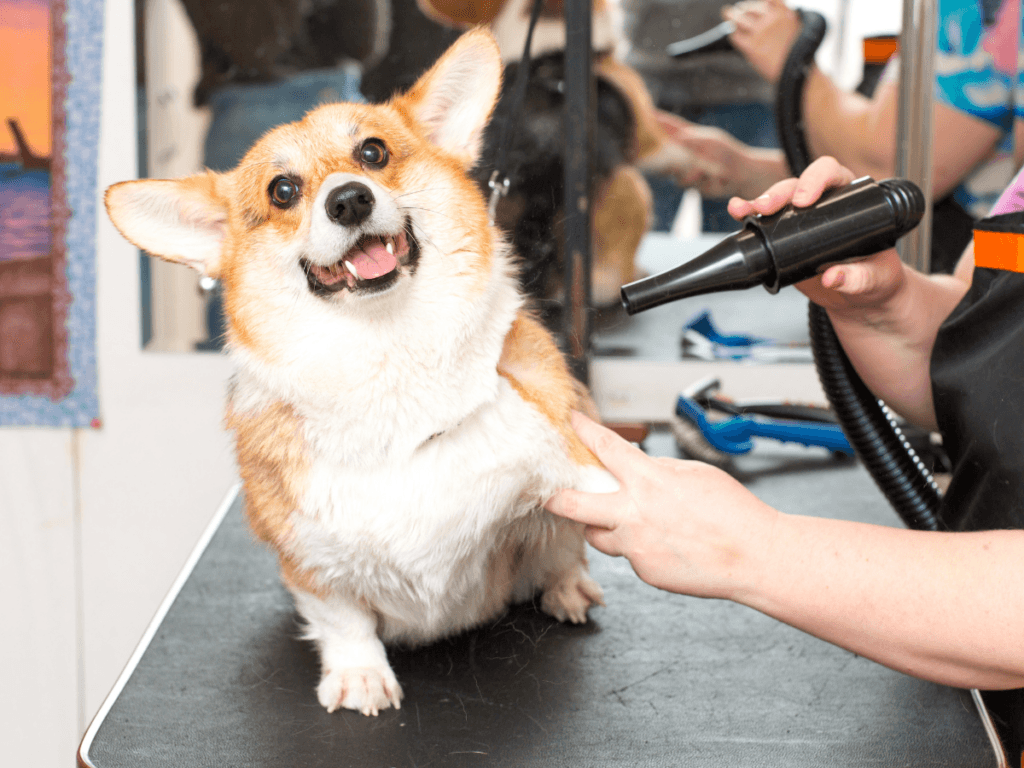
Once the fundamentals are solid, continuing education becomes less about learning how to groom and more about refining how well you handle specific coats, styles, tools, and working situations.
Advanced grooming workshops can give experienced groomers concentrated practice in techniques that are difficult to develop through routine salon work alone.
The most useful training is usually targeted. A groomer who wants cleaner finishes may benefit from advanced scissoring, while someone working with terriers may get more value from hand-stripping instruction.
Others may want to improve speed, learn specialty styling, or become more confident working with challenging coat conditions.
Which Advanced Grooming Techniques Are Commonly Taught?
Course content varies considerably, but advanced education may cover breed-specific styling, hand scissoring, hand stripping, carding, blending, pattern setting, coat preparation, finishing techniques, and creative grooming.
These subjects require more than watching a demonstration. Small differences in coat preparation, tool angle, tension, product selection, or scissor technique can change the final result.
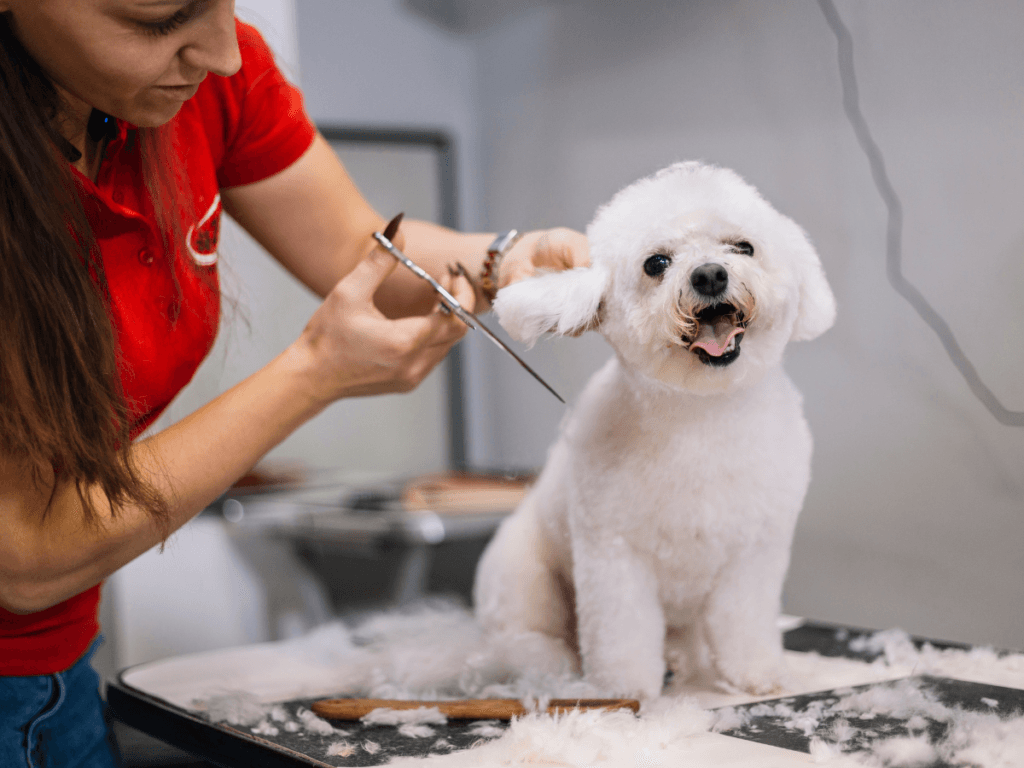
Hands-on grooming workshops allow participants to practice those details while an instructor can identify where the technique is breaking down.
Creative grooming is another specialty that may appear in advanced education, including decorative styling or the safe use of products specifically intended for pets. Groomers interested in this area should prioritize instruction that addresses product safety and animal welfare alongside artistic technique.
Not every advanced course leads to certification. When a credential is offered, requirements depend on the organization and may include written tests, practical examinations, portfolio work, or demonstrated proficiency in specific techniques.
Why Breed-Specific Grooming Requires More Than Memorizing a Haircut
Breed-specific grooming is sometimes reduced to learning where to place particular lines or how short to trim different areas. In practice, good breed styling requires an understanding of coat type, structure, balance, grooming history, and the condition of the individual dog.
Two dogs of the same breed may not arrive at the salon with identical coats or lifestyles. A pet owner may also want a practical variation of a traditional breed trim rather than a show-style finish. The groomer’s job is to understand the established profile while adapting it appropriately to the dog and the owner’s preferences.
Consultation matters here. Reference photos, maintenance expectations, coat condition, and the owner’s preferred length should be discussed before grooming begins. Keeping notes and photographs from previous appointments can also make future results more consistent.
How Can Advanced Training Improve Grooming Efficiency?
Speed is valuable in a professional salon, but simply trying to groom faster can lead to rushed work. Advanced education can instead help groomers identify where their workflow is inefficient.
For example, better coat preparation may reduce the amount of corrective finishing needed later. A more organized tool setup can eliminate repeated interruptions. Improved clipper and scissor control may allow a groomer to create the desired shape with fewer passes.
This makes efficiency a technical skill rather than a race against the clock. The goal is a repeatable process that protects grooming quality, safety, and the dog’s comfort.
What Skills Are Becoming More Important in Mobile Grooming?
Mobile grooming changes the working environment even when the grooming techniques themselves remain familiar. Space is limited, equipment must be organized carefully, and groomers often manage appointments, travel, cleaning, client communication, and grooming within a tightly planned schedule.
Training for mobile groomers may therefore cover workflow design, equipment organization, sanitation, appointment scheduling, vehicle-based safety considerations, and contingency planning.
Groomers also need realistic scheduling practices that account for travel and setup rather than treating every appointment like a salon booking.
How Is Salon Management Becoming Part of Grooming Education?
Technical ability is only one part of running or leading a grooming business. Experienced groomers moving into management may need entirely different skills, including scheduling, pricing, inventory control, employee training, customer service, recordkeeping, and handling complaints.
For someone planning to become a salon manager or owner, business-focused education may ultimately be more useful than another technical certification. Continuing education should follow the groomer’s actual career direction.
How Should Groomers Evaluate New Tools and Techniques?
New clippers, dryers, grooming products, handling equipment, and specialty tools regularly enter the market, but “new” does not automatically mean better.
Before changing an established workflow, consider what problem the product or technique is supposed to solve. Equipment should be evaluated for factors such as ergonomics, noise, vibration, maintenance requirements, suitability for the intended coat or task, and safe use around animals.
This is another area where grooming workshops can be valuable. Trying equipment under professional guidance and comparing techniques in a controlled setting gives groomers a better basis for deciding what deserves a place in their everyday workflow.
How Dog Grooming Workshops Turn Training Into Practical Skill
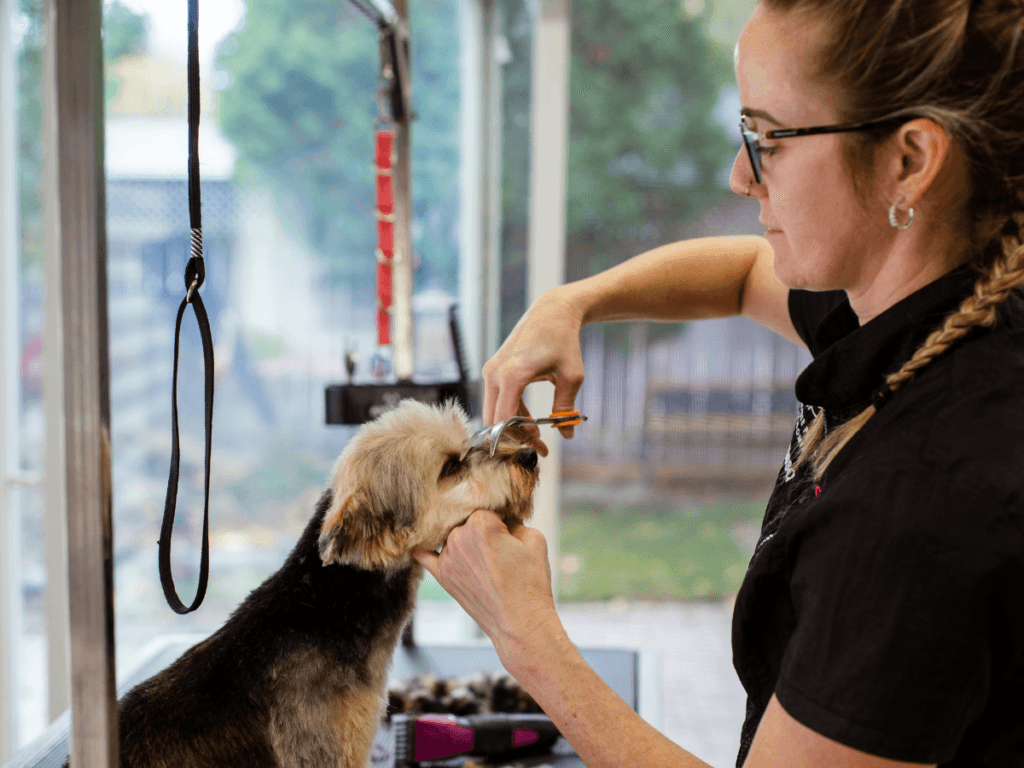
Formal certification can provide a broad foundation, but not every skill gap requires another full-length program. Grooming workshops give working professionals a more focused way to improve a particular technique, explore a specialty, or get direct feedback on an area they find challenging.
Unlike general coursework, a well-designed workshop has a narrow objective. One session might concentrate on scissor finishing, while another covers hand stripping, coat preparation, breed profiles, handling, or salon efficiency.
That focus makes workshops especially useful for groomers who already know the fundamentals and want to improve a specific part of their work.
What Happens During a Hands-On Grooming Workshop?
Formats vary, so it is worth checking exactly what “hands-on” means before registering. Some workshops center on instructor demonstrations, while others allow participants to practice techniques themselves on dogs, mannequins, coat samples, or other training models.
In a practical session, an instructor may first demonstrate the technique while explaining tool selection, positioning, workflow, and common mistakes. Participants then apply what they have seen and receive feedback as they work.
That feedback is often the most valuable part. A groomer may know that a finish looks uneven without knowing why. An experienced instructor can identify whether the problem comes from coat preparation, body positioning, scissor control, clipper technique, or the sequence in which the groom is being completed.
When live animals are involved, workshops should also prioritize appropriate handling, animal welfare, sanitation, and safe tool use throughout the session.
How to Choose Grooming Workshops That Match Your Skill Level
A workshop should stretch your abilities without assuming knowledge you have not developed yet. Before registering, read the course description carefully and look for stated prerequisites or an intended experience level.
Beginner workshops may cover tool handling, bathing and drying, coat preparation, brushing, basic trimming, or foundational scissor skills. Intermediate and advanced sessions can move into areas such as breed-specific styling, hand stripping, advanced finishing, creative grooming, or specialized coat techniques.
The instructor matters too. Look beyond a short biography and consider whether their professional experience is relevant to the subject they are teaching.
A highly accomplished competition groomer, for example, may be an excellent choice for advanced breed styling, while a salon educator with extensive teaching experience may be better suited to practical workflow training.
Class size also affects the experience. If individual correction is important, find out how many participants will share each instructor and how much actual practice time is included.
When Are Demonstrations More Useful Than Hands-On Practice?
Hands-on instruction is valuable, but demonstrations have their place. Watching an experienced groomer work from start to finish can reveal details that are difficult to communicate through written instructions alone.
A good demonstration explains not only what the instructor is doing but why. Participants should be able to see how the groomer evaluates the coat, chooses tools, establishes the shape, moves between sections, corrects imperfections, and determines when the finish is complete.
Demonstration-based education can be particularly useful when introducing an unfamiliar technique. Groomers can then practice the process later, ideally with feedback from a qualified instructor or mentor.
What Other Continuing Education Options Are Available?
Workshops are only one part of professional development. Trade shows, grooming competitions, webinars, online courses, seminars, and mentorship can each serve a different purpose.
Trade shows are useful for seeing equipment, attending demonstrations, meeting educators, and learning about developments across the industry. Competitions allow experienced groomers to observe high-level technical work and, when participating, receive an external measure of their own abilities.
Online courses and webinars offer more flexibility. They can work especially well for business management, client communication, theory, product education, and demonstrations that groomers want to revisit. Technical lessons are most useful when online learning is paired with deliberate physical practice.
Mentorship provides something different again: ongoing feedback from someone familiar with the groomer’s actual work and development over time.
How to Get More Value From a Grooming Workshop
The learning should continue after the workshop ends. Instead of trying to remember every technique presented, identify one or two specific changes to practice during upcoming grooms.
Take useful before-and-after notes. Record what you changed, which tools you used, what improved, and where you still struggled. Photographs can also make subtle improvements in balance, shape, and finishing easier to evaluate over time.
Most importantly, choose grooming workshops based on a skill you genuinely want to develop. A focused class followed by repeated practice is likely to offer more professional value than attending education simply because it is available.
Why Continuing Education Matters for a Long-Term Grooming Career
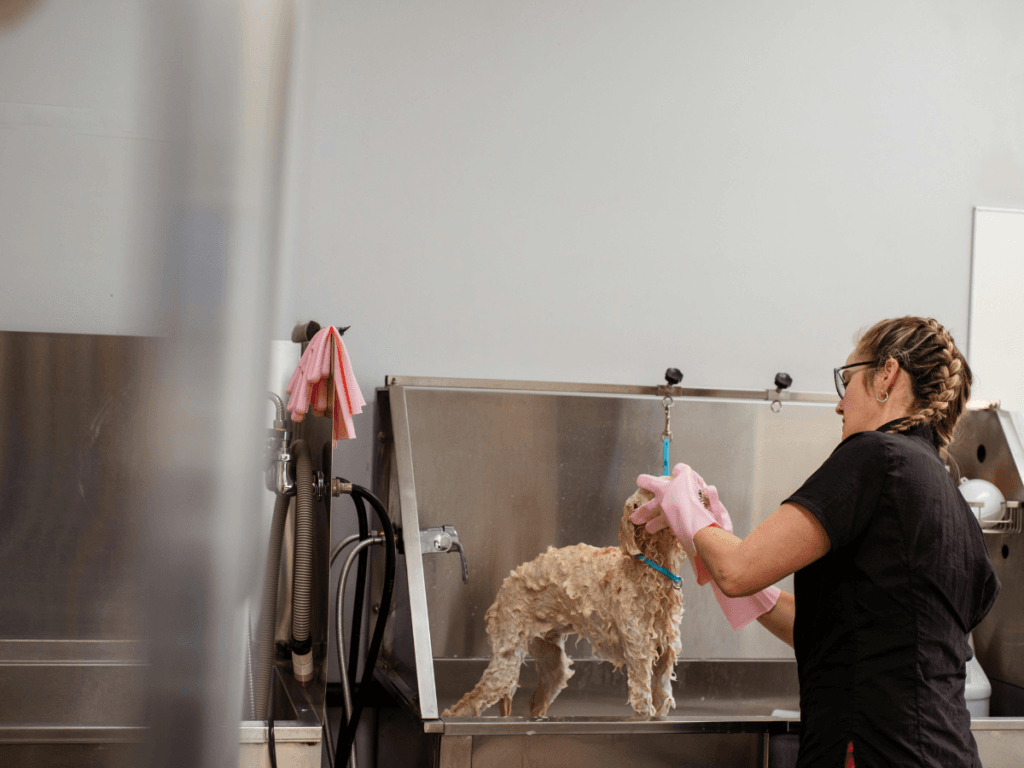
Continuing education becomes more valuable as a groomer’s career develops because the skills that matter often change. A new groomer may need to concentrate almost entirely on technique, handling, safety, and efficiency.
Someone with several years of experience may be thinking about specialization, pricing, client management, leadership, or eventually running a salon.
That means professional development should not simply repeat basic grooming instruction. Courses, mentorship, and grooming workshops can be used strategically to fill specific gaps and prepare for the next stage of a career.
How Can Continuing Education Prevent Skills From Becoming Stagnant?
Experience alone does not guarantee improvement. Once a routine becomes familiar, it is easy to keep performing a technique the same way without noticing where it could be cleaner, safer, or more efficient.
Periodic training provides an outside perspective. An instructor may identify unnecessary steps in a groomer’s workflow, suggest a different approach to coat preparation, or help refine a technique that has become inconsistent over time.
Experienced groomers can get more from continuing education by choosing one measurable goal at a time. Improving scissor finishes, reducing unnecessary rework, becoming more confident with a particular coat type, or strengthening consultations are all more useful objectives than simply “getting better at grooming.”
How Can Advanced Training Support Career Growth?
Professional development does not have to lead everyone in the same direction. Some groomers want to become technical specialists. Others want to manage employees, open a business, teach, compete, or develop a particular type of clientele.
The right education depends on that destination.
A groomer interested in specialty services might pursue advanced breed styling, hand stripping, creative grooming, or another technical area. Someone preparing for management may get more value from training in scheduling, employee development, customer service, or business operations.
Grooming workshops can be particularly useful here because they allow professionals to target individual skills without committing to a broad program that covers material they already know.
Which Business Skills Matter for Professional Dog Groomers?
Technical ability gets a groomer through the appointment. Business skills determine whether those appointments can support a sustainable operation.
For self-employed groomers and salon owners, that means understanding the actual cost of providing a service. Pricing should account for more than the minutes spent grooming.
Equipment, products, maintenance, utilities, administrative work, payment processing, insurance, and other operating expenses can all affect what a service needs to earn.
Basic financial literacy also helps groomers evaluate whether a specialty service is worthwhile, when equipment can reasonably be replaced, and whether a busy schedule is actually producing healthy business results.
Groomers who work as employees can benefit from these skills too, particularly if they hope to move into supervisory or management positions.
Why Client Communication Is a Professional Grooming Skill
A technically excellent groom can still result in an unhappy customer when expectations were unclear from the beginning.
Strong consultations help prevent that problem. Groomers need to ask what the client wants, assess what is realistically possible given the dog’s coat condition and behavior, and explain any necessary changes before work begins whenever possible.
Clear communication becomes especially important when dealing with matting, significant style changes, maintenance requirements, scheduling problems, or a service that cannot safely be completed as requested.
Good client records support those conversations. Notes about previous trims, blade or comb lengths, sensitivities, behavior, products, and owner preferences make future appointments easier to reproduce and reduce reliance on memory.
How Does Salon Management Training Prepare Groomers for Leadership?
Managing a grooming salon requires a different skill set from grooming dogs all day. A strong groomer is not automatically prepared to coordinate staff, organize a busy appointment book, resolve client complaints, maintain inventory, or make operational decisions.
Management education can address scheduling, workflow, delegation, staff communication, customer service, recordkeeping, inventory, and basic financial planning. It can also help future managers understand how scheduling decisions affect both employee workload and service quality.
Time management is particularly important. Filling every available appointment slot may look efficient on paper, but a schedule needs enough flexibility to accommodate coat condition, behavior, cleaning, client handoffs, and unexpected delays.
What Marketing Skills Are Worth Learning?
Groomers do not need to become full-time marketers, but they should understand how potential clients discover and evaluate their services.
Useful training may cover local visibility, online reviews, referral strategies, social media, portfolio photography, service descriptions, and communicating specialties clearly.
Marketing education should also help groomers distinguish between attracting more clients and attracting the right clients for the services they want to provide.
For an established groomer, the goal may not be more appointments at all. It might be building demand for a specialty, improving retention, or creating a client base that better matches the direction of the business.
That broader perspective is what makes continuing education valuable. The best courses and grooming workshops do more than add another credential. They help groomers identify where they want their careers to go and develop the technical, business, and communication skills needed to get there.
How Grooming Safety and Animal Handling Training Protect Dogs and Groomers
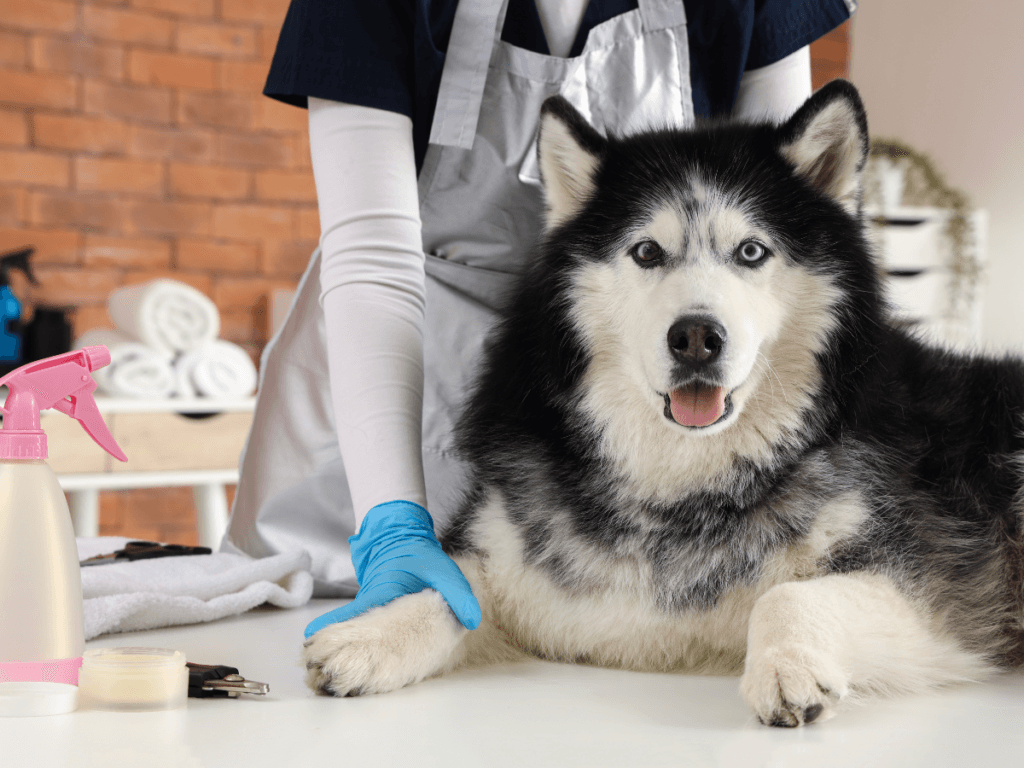
Safety is not a separate skill that groomers learn once and then set aside. It influences nearly every part of an appointment, from placing a dog on the table to choosing equipment, recognizing stress, maintaining sanitation, and deciding whether a service can safely continue.
Professional grooming workshops should therefore teach more than how to produce a polished finished groom. Effective training shows groomers how to adjust their approach when the dog, equipment, environment, or circumstances change.
That judgment is particularly important because dogs can respond differently to handling, dryers, clippers, unfamiliar sounds, and prolonged grooming sessions.
Reading Canine Body Language Before Behavior Escalates
Safe handling begins with observation. Dogs may communicate discomfort through changes in posture, movement, facial expression, vocalization, or attempts to move away. Learning to recognize these signals gives groomers an opportunity to respond before stress intensifies.
Rather than relying on a single behavior as proof that a dog is fearful or aggressive, training should teach groomers to consider the dog’s overall behavior and the context in which it occurs.
A sudden change during nail trimming, for example, may call for a different response than general restlessness at the beginning of an appointment. This type of observation supports better decision-making throughout the groom.
Adapting Handling Techniques to the Individual Dog
There is no single handling technique that works for every animal. Size, age, mobility, coat condition, previous grooming experience, temperament, and physical limitations can all affect how a dog should be handled.
Groomers need to know when to change positioning, adjust equipment, take a break, modify the planned service, or stop altogether. The goal is not simply to finish every groom as originally scheduled. Professional judgment includes recognizing when continuing would create unnecessary risk.
Hands-on grooming workshops are particularly useful for developing this judgment because instructors can observe technique in real time. They can point out excessive restraint, awkward positioning, poor tool placement, or missed behavioral cues that may be difficult for a student to identify independently.
Equipment Safety and Sanitation in the Grooming Environment
Animal handling is only one part of grooming safety. Training should also address the physical environment in which the service takes place.
Students need practical instruction on safely using and maintaining clippers, blades, shears, dryers, grooming loops, tables, tubs, and other equipment. They should understand how improper setup or damaged equipment can create hazards even when handling technique is otherwise sound.
Sanitation deserves the same attention. Cleaning and disinfecting tools and work surfaces, managing used towels, and keeping work areas organized are basic parts of professional salon hygiene.
Training should distinguish between routine cleaning and the procedures required by the products, equipment, and workplace policies being used.
Preparing Groomers to Respond to Unexpected Problems
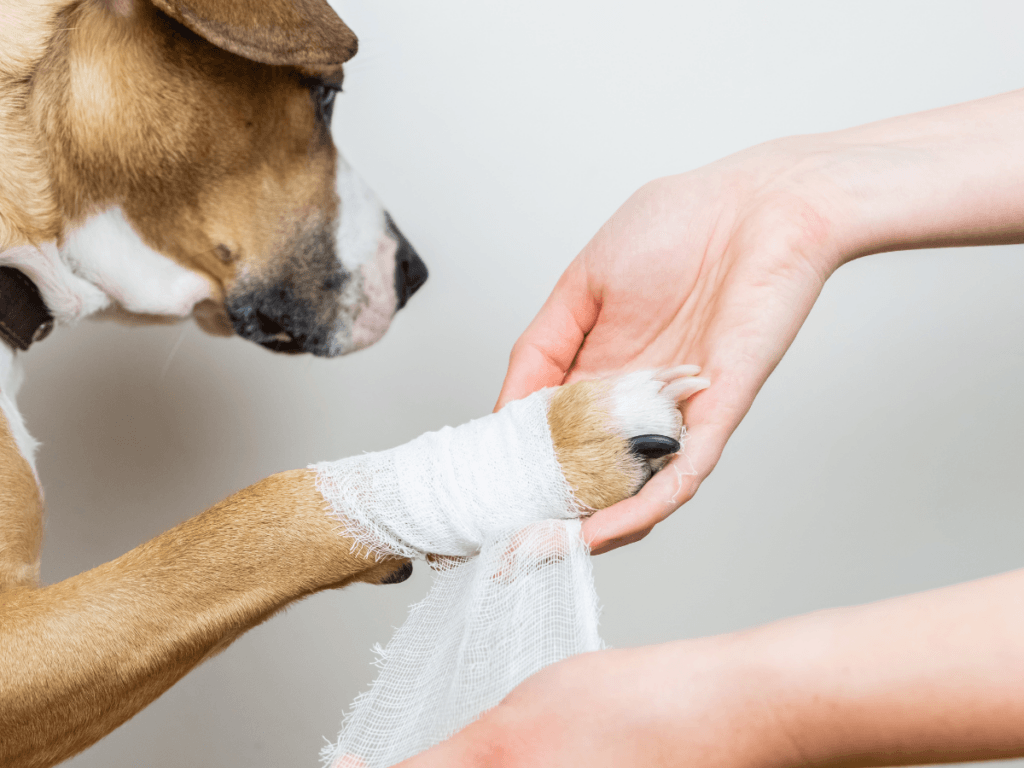
Even careful professionals can encounter an unexpected injury, sudden illness, equipment problem, or behavioral change. Safety education should prepare groomers to recognize when a situation has moved beyond routine grooming.
Basic pet first aid training can complement professional grooming education by teaching appropriate initial responses to common emergencies. Just as important is knowing the limits of a groomer’s role.
A groomer should be prepared to stop a service, contact the owner, and seek veterinary attention when the situation requires medical evaluation rather than attempting to diagnose or treat a health problem.
Emergency procedures should also cover practical questions such as where client contact information is stored, how incidents are documented, and what staff members should do if an emergency occurs.
How Safety Skills Should Be Practiced and Evaluated
Safety is difficult to assess through written coursework alone. A student may understand a rule in theory but struggle to apply it while simultaneously handling a moving dog and operating grooming equipment.
For that reason, strong training combines explanation, demonstration, supervised practice, and instructor feedback.
Students should have opportunities to show that they can position animals appropriately, operate equipment safely, maintain a controlled workspace, recognize behavioral changes, and respond when conditions become unsafe.
Feedback should focus on specific behaviors rather than vague instructions to “be more careful.” Correcting table height, hand placement, restraint pressure, tool position, or timing gives students something concrete to improve.
Why Safety Training Remains Important After Certification
Completing a course does not eliminate the need for continued safety education. Groomers encounter different dogs, new equipment, changing salon procedures, and situations that may expose gaps in their existing skills.
Continuing education and grooming workshops give working professionals an opportunity to revisit handling techniques, practice unfamiliar scenarios, and correct habits that have developed over time.
Training can be especially useful when a groomer begins working with senior dogs, puppies, dogs with mobility limitations, or other clients whose grooming needs require a more individualized approach.
Strong safety education ultimately teaches something broader than a collection of rules. It develops the observation and professional judgment groomers need to recognize risk, adapt their technique, and make responsible decisions throughout every appointment.
Common Challenges Professional Dog Groomers Face and How Training Helps
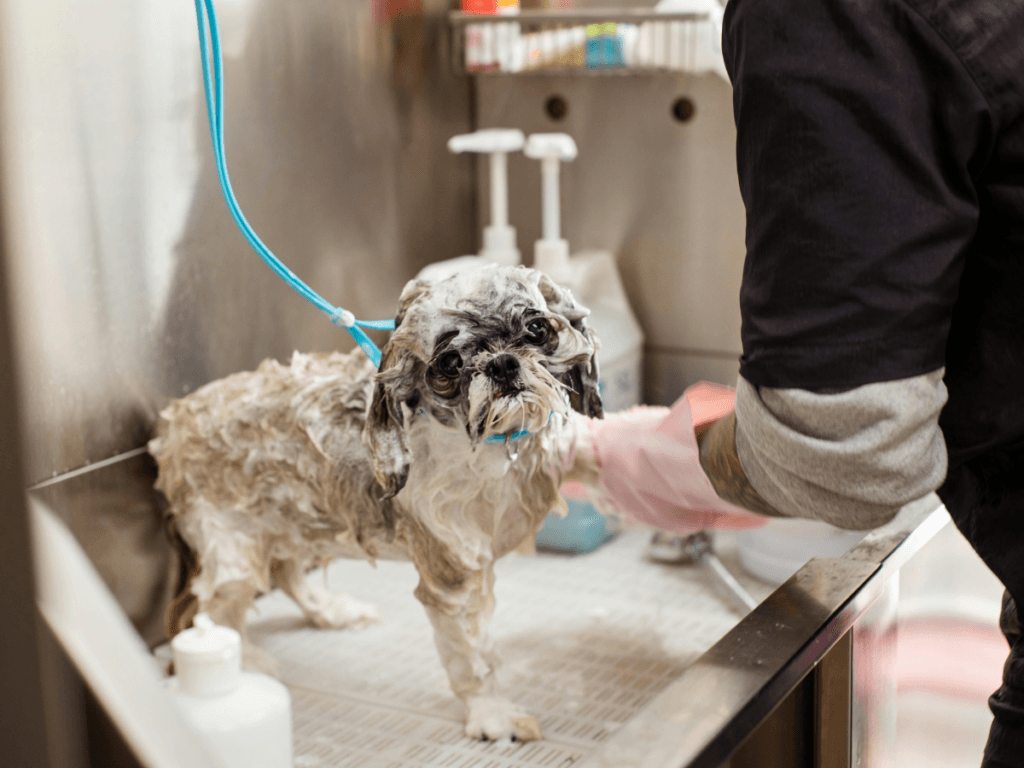
Professional grooming requires far more than technical skill with clippers and shears. Groomers also manage physical demands, unpredictable animal behavior, client expectations, scheduling pressures, and the ongoing challenge of building a sustainable career.
Some problems improve with experience, while others require deliberate changes in technique, workflow, or business practices.
Continuing education and grooming workshops can help professionals identify weak points before they become persistent problems. The most useful training does not simply introduce new grooming styles. It teaches groomers how to work more safely, efficiently, and consistently in situations they encounter every day.
Managing Physical Fatigue and Repetitive Strain
Grooming can involve hours of standing, bending, lifting, holding tools, and maintaining precise hand positions. Over a full schedule, even small ergonomic problems can contribute to fatigue and discomfort.
A better approach starts with the workstation. Adjustable tables, appropriate working heights, supportive footwear, well-maintained tools, and an organized setup can reduce unnecessary reaching and awkward positioning.
Groomers can also alternate physically demanding appointments when scheduling allows instead of placing several large or labor-intensive dogs back to back.
Technique matters as well. Holding clippers too tightly or working from an uncomfortable angle may feel insignificant during one appointment but becomes harder to sustain across a busy week.
Grooming workshops that include hands-on observation can be valuable because instructors may notice inefficient movements or positioning habits that groomers no longer recognize themselves.
Working Safely With Fearful or Reactive Dogs
A dog that is comfortable during one part of a groom may become distressed during another. Nail trimming, dryers, handling around sensitive areas, unfamiliar equipment, or prolonged restraint can all affect behavior.
The challenge is not simply knowing how to control a difficult dog. Groomers need to recognize changes in behavior early enough to adjust their approach. That might mean changing positioning, slowing the process, taking a break, modifying the service, or stopping when continuing would create an unacceptable risk.
Training in canine behavior and handling can strengthen this decision-making. Groomers can learn to recognize behavioral cues, understand possible triggers, and distinguish between a dog that needs time to settle and one whose behavior makes the planned service unsafe.
Clear communication with owners is equally important. Asking about previous grooming experiences, sensitivities, health considerations, and known triggers before the appointment can give the groomer useful context.
When a service must be modified or stopped, documenting what occurred can also help plan a safer approach for future visits.
Building and Retaining a Reliable Client Base
Technical ability does not automatically create a full appointment book. New groomers must also establish trust with pet owners and give clients a reason to return.
Consistency is one of the strongest foundations for retention. Clients want to know what to expect when they bring their dog back, including the finished style, appointment process, communication, and general standard of care.
Keeping grooming notes, reference photos, coat information, and client preferences can make repeat appointments more consistent.
Communication can prevent many common frustrations. Confirming the requested cut before starting, explaining when coat condition limits styling options, and setting realistic expectations about timing can reduce misunderstandings after the groom.
Business-focused grooming workshops can complement technical training by covering consultations, client communication, scheduling, pricing, recordkeeping, and other skills that directly affect the customer experience.
Balancing Speed With Grooming Quality
As groomers gain clients, another challenge often appears: completing appointments efficiently without allowing speed to compromise quality or safety.
Efficiency should come from improving workflow rather than simply working faster. Preparing tools before the dog reaches the table, following a consistent grooming sequence, keeping equipment properly maintained, and organizing supplies within easy reach can eliminate wasted movement and interruptions.
Tracking appointment times can also reveal where delays occur. One groomer may lose time during drying, while another may need to improve scissoring efficiency or appointment preparation. Identifying the actual bottleneck makes additional training much more useful.
Using Continuing Education to Solve Specific Problems
Professional development is most valuable when it addresses a real weakness or career goal. Instead of choosing courses simply because they are available, groomers can look at the problems they encounter repeatedly and select training accordingly.
A groomer struggling with certain coat types might choose a breed-specific class. Someone experiencing difficult appointments may benefit more from animal-handling education. A groomer preparing to open a salon may need training in pricing, scheduling, staff management, and client policies.
This is where targeted grooming workshops can be especially practical. They allow professionals to focus on a defined skill or challenge, practice it with guidance, and return to their regular work with techniques they can immediately put into use.
Frequently Asked Questions About Dog Grooming Continuing Education
Do You Need Experience Before Taking Advanced Grooming Workshops?
Requirements depend on the course. Beginner grooming workshops may accept students with little or no professional experience, while advanced classes often expect participants to be comfortable with bathing, drying, clipping, scissoring, nail care, and safe animal handling.
Before enrolling, check whether the instructor lists prerequisites such as previous coursework, professional grooming experience, a portfolio, or specific technical skills. This matters especially for hands-on classes, where the instructor may assume participants already understand foundational techniques.
Certification programs can have separate requirements, so a workshop should not automatically be treated as a certification course. Always confirm what credential, if any, is awarded upon completion.
How Can Dog Groomers Keep Up With New Techniques and Industry Trends?
Continuing education works best when it comes from several sources. Groomers can attend hands-on classes, trade shows, seminars, competitions, demonstrations, webinars, and industry events to see how other professionals approach familiar challenges.
The goal is not to adopt every new technique or product that appears. Instead, groomers should evaluate whether a new method improves safety, efficiency, coat care, animal comfort, or the quality of the finished groom.
Following experienced educators and professional organizations can also help groomers identify subjects worth studying more closely.
Are Online Grooming Courses as Useful as In-Person Training?
Online education can be valuable, but its usefulness depends heavily on the subject. Topics such as client communication, salon management, pricing, safety theory, canine behavior, and business operations can work well in an online format.
Technical skills are different. Watching an instructor demonstrate scissoring or clipper work can help a groomer understand the process, but video cannot provide immediate correction of hand position, pressure, tool angle, or handling technique.
For practical skills, online instruction is often strongest when paired with independent practice or in-person grooming workshops where an instructor can observe and correct technique.
What Can Groomers Learn From Grooming Competitions?
Competitions give groomers an opportunity to observe advanced techniques, compare finishing standards, work under time constraints, and receive feedback on their performance.
Even groomers who do not compete can learn by watching demonstrations and studying how experienced professionals approach preparation, shaping, balance, and finishing.
Competition experience can also help groomers build professional connections and develop a portfolio. However, competition grooming and everyday salon grooming do not always have identical priorities, so techniques should be adapted appropriately for regular client work.
Which Marketing Skills Are Most Useful for Professional Groomers?
Effective marketing starts with making it easy for the right clients to understand what you offer. A groomer might use a professional website, social media portfolio, before-and-after photographs, local business listings, referral programs, or partnerships with other pet-related businesses.
Client retention deserves just as much attention as attracting new customers. Accurate appointment records, clear communication, consistent results, convenient rebooking, and professional handling of concerns can all support repeat business.
Business-focused continuing education can help groomers connect marketing decisions with pricing, scheduling, customer service, and long-term profitability rather than treating promotion as a separate task.
How Can Groomers Reduce Physical Fatigue During a Busy Workday?
Physical strain can build gradually through repetitive movements, prolonged standing, lifting, bending, and awkward working positions. An efficient workstation can reduce some of that unnecessary stress.
Adjustable grooming tables, properly positioned equipment, comfortable footwear, organized tools, and appropriate lifting practices can make daily work easier to manage. Short breaks between appointments may also provide opportunities to change position and recover from repetitive tasks.
If pain or physical symptoms persist, groomers should seek appropriate medical or ergonomic guidance rather than relying solely on general workplace advice.
Why Is Networking Valuable for Professional Dog Groomers?
A strong professional network gives groomers access to knowledge that may not be available through formal coursework alone. Other professionals can share experiences with equipment, techniques, difficult grooming situations, salon operations, and career development.
Trade shows, competitions, professional groups, continuing education programs, and grooming workshops all create opportunities to meet instructors, salon owners, experienced groomers, and peers at similar career stages.
These relationships can eventually lead to mentorship, referrals, job opportunities, collaborations, or simply a trusted group of professionals to consult when an unfamiliar challenge arises.
How Often Should Professional Groomers Take Continuing Education?
There is no single schedule that suits every groomer. A better approach is to choose education according to current skill gaps, career goals, and changes in the services you provide.
A newer groomer may need frequent hands-on instruction in core techniques, while an experienced professional might focus on occasional specialty courses in areas such as advanced scissoring, breed-specific grooming, animal handling, or salon management.
The important part is that continuing education remains purposeful, with each course helping develop a skill that can be applied in professional practice.
Conclusion
Continuing education can help dog groomers sharpen their technique, expand their service offerings, and stay current with evolving industry standards.
From hands-on grooming workshops to advanced skill development and certification pathways, ongoing training gives both new and experienced groomers opportunities to build confidence and strengthen their professional credentials.
Choosing the right educational program can also provide the practical experience needed to turn grooming skills into a rewarding career.
For professional grooming education and hands-on training, choose OTCK9 Grooming School. If you’re ready to take the next step in your grooming education, call 770-874-1803 to speak with the team at OTCK9 Grooming School or fill out the online form to request your free quote today.